March 2008
Monthly Archive
Posted by Glenn
No Comments
March 21-22 2008
Air Temperatures – The following maximum temperatures were recorded across the state of Hawaii Friday:
Lihue, Kauai – 81
Honolulu, Oahu – 83
Kaneohe, Oahu – 79
Kahului, Maui – 83
Hilo, Hawaii – 77
Kailua-Kona, Hawaii – 82
Temperatures ranged between these warmest and coolest spots near sea level at 5 a.m. Friday morning:
Kailua-kona – 75F
Kahului, Maui – 65
Precipitation Totals – The following numbers represent the largest precipitation totals (inches) during the last 24 hours on each of the major islands, as of Friday morning:
9.66 MOUNT WAIALEALE, KAUAI
2.41 POAMOHO 2, OAHU
0.00 MOLOKAI
0.04 LANAI
0.00 KAHOOLAWE
0.79 PUU KUKUI, MAUI
1.07 GLENWOOD, BIG ISLAND
Weather Chart – Here’s the latest (automatically updated) weather map. A high pressure system is located far to the northeast of Hawaii this weekend. Our local trade winds have become lighter as the high pressure cell is now in the eastern Pacific Ocean…remaining light to moderately strong through Sunday.
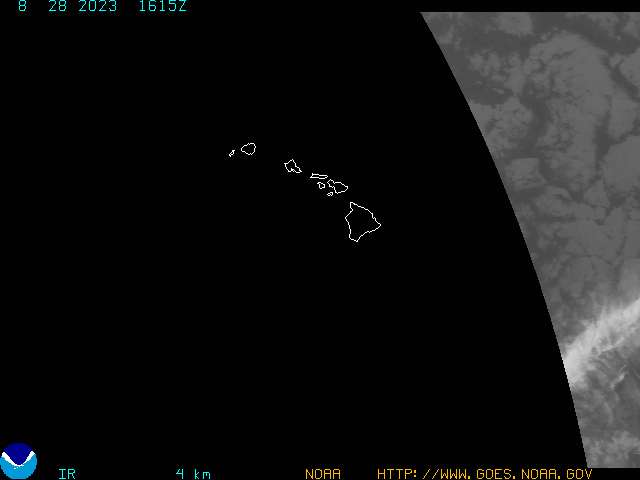
Satellite and Radar Images: To view the cloud conditions we have here in Hawaii, please use the following satellite links, starting off with the Infrared Satellite Image of the islands to see all the clouds around the state during the day and night. This next image is one that gives close images of the islands only during the daytime hours, and is referred to as a Close-up visible image. This next image shows a larger view of the Pacific…giving perspective to the wider ranging cloud patterns in the Pacific Ocean…out from the islands. To help you keep track of where any showers may be around the islands, here’s the latest animated radar image.
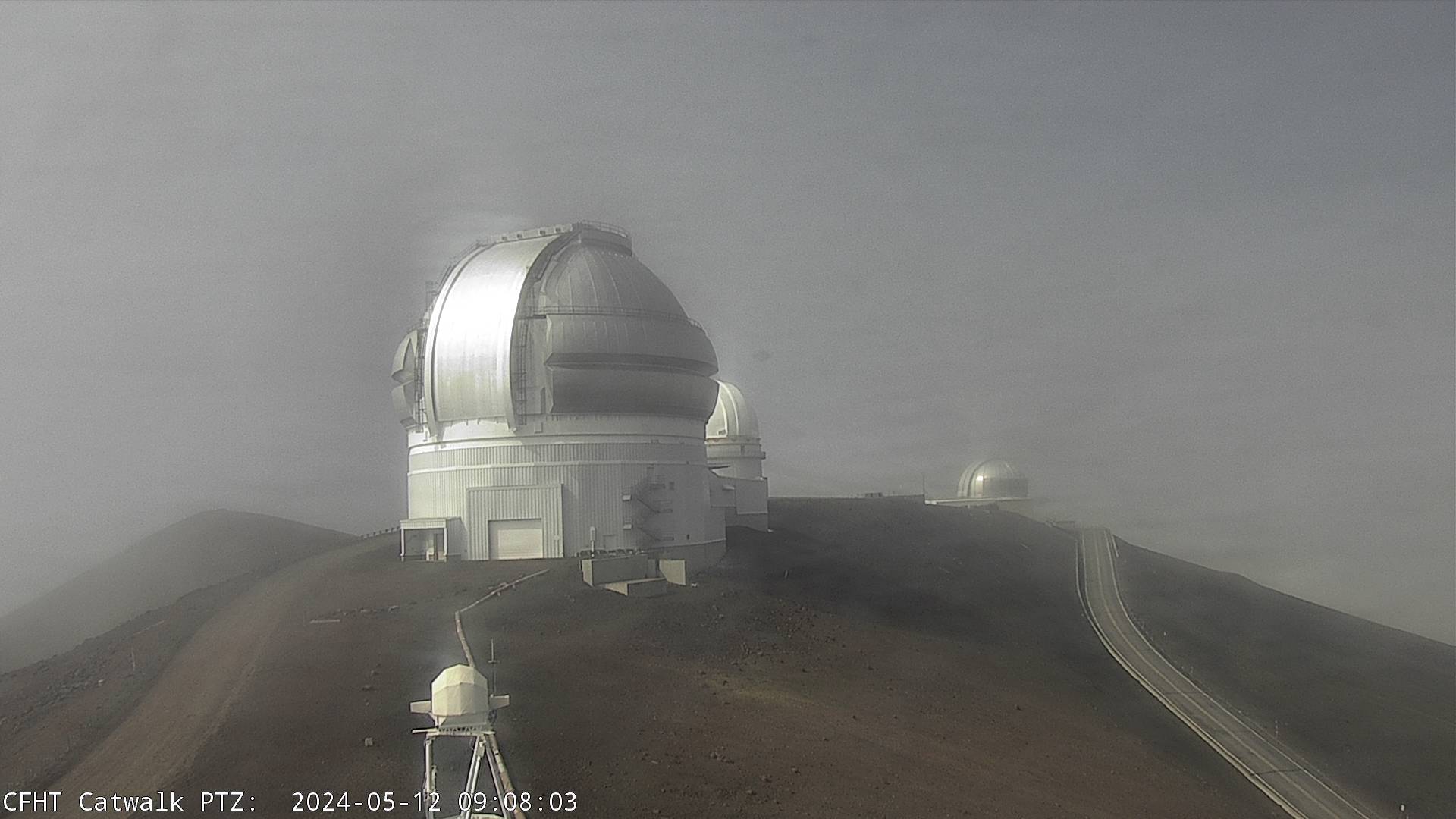
Hawaii’s Mountains – Here’s a link to the live webcam on the summit of near 14,000 foot Mauna Kea on the Big Island of Hawaii. The tallest peak on the island of Maui is the Haleakala Crater, which is near 10,000 feet in elevation. These two webcams are available during the daylight hours here in the islands…and when there’s a big moon rising just after sunset for an hour or two! Plus, during the nights and early mornings you will be able to see stars, and the sunrise too…depending upon cloud conditions.
Aloha Paragraphs
 Whale watching from a kayak
Photo Credit: flikr.com
The trade winds will remain active, continuing that way through the weekend. Our trade wind producing high pressure system continues edging eastward. It has slipped into the eastern Pacific now, getting too far away to provide the strong and gusty trade winds that we saw earlier in the week. The winds are light enough now, that the small craft advisory flags have all been taken down…leaving no marine warnings or advisories in effect. The latest computer forecast guidance suggests that the trade winds will continue to blow through the next week…remaining more or less in the moderately strong realms.
The windward sides, and around the mountains of Hawaii, will see the most generous showers. A trough of low pressure is moving by to our north, which will add some degree of enhancement to whatever local showers that fall. The leeward sides will be remain dry for the most part, although even there could see a shower over the next couple of days. The wind
It’s Friday evening as I begin updating this last paragraph of today’s narrative. If we were to summarize the information in the two paragraphs above: somewhat lighter trade winds now, and passing showers along the windward sides and around the mountains. There’s nothing unusual about any of this, and is actually quite common, according to climatology…for the first several days of our new spring season. The one wild card at this point, is whether the trough of low pressure moving by to our north, will spark anymore heavy showers? What heavy showers you may ask? Well, how about the 9.66" that has fallen atop Mount Waialeale on Kauai during the last 24 hours! ~~~ Taking a look at this looping satellite image, we see that high and middle level clouds have thinned quite a bit Friday, and with any luck will stay away for the time being. I say "with any luck" in regards to the sun dimming and filtering that they do when they are around. ~~~ I’m meeting a friend in Paia for dinner, at a little vegetarian restaurant. The celebration is her 50th birthday, which is quite an occasion. ~~~ I will be early Saturday morning with your next new weather narrative from paradise. I hope you have a peaceful Good Friday night until then. Aloha for now…Glenn.
Interesting: Those incoming federal tax-rebate checks could do more than boost the economy. They might also boost your mood, with one caveat: You must spend the cash on others, not yourself. New research reveals that when individuals dole out money for gifts for friends or charitable donations, they get a boost in happiness while those who spend on themselves get no such cheery lift. Scientists have found evidence that income is linked with a person’s satisfaction with their life and other measures of happiness, but less is known about the link between how a person spends their money and happiness.
"We wanted to test our theory that how people spend their money is at least as important as how much money they earn," said Elizabeth Dunn, a psychologist at the University of British Columbia. The findings, to be detailed in the March 21 issue of the journal Science, come as no surprise to some marketing scientists. "It doesn’t surprise me at all that people find giving money away very rewarding," said Aaron Ahuvia, associate professor of marketing at the University of Michigan-Dearborn, who was not involved in the current study.
Interesting2: Whether you are cresting the peak of a majestic volcano or walking on a city street, there are immense amounts of heat beneath your feet — enough to provide all the energy the human population will ever need. In most places, though, that heat is trapped by solid rock — unavailable to our carbon-choked, energy-hungry populace. But the power could now be unleashed.
The 2009 Department of Energy (DOE) budget released in early February includes about $30 million for geothermal energy exploration — mostly for the construction of Enhanced Geothermal Systems (EGS) demonstration plants. This is the first step toward achieving enough clean, constant power from the earth to provide around 10 percent of our baseline energy needs — a goal put forward by a panel of experts in January 2007.
Interesting3: An explosion atop the long-erupting Kilauea volcano rained gravel-size rocks onto a tourist lookout, road and trail, injuring no one but forcing parts of a national park to close. It was the first explosion in Kilauea’s main Halemaumau Crater since 1924, scattering debris over about 75 acres, said Jim Kauahikaua, scientist-in-charge at Hawaiian Volcano Observatory on the Big Island. The 4,190-foot volcano has been erupting from fissures along its side steadily for more than a quarter-century. Hawaii Volcanoes National Park draws thousands of people daily, with a visitors center and lodge near the crater rim.
No lava erupted as part of the 3 a.m. explosion. That suggests it was caused by hydrothermal or gas buildup, Kauahikaua said. Scientists monitoring the summit say that there’s a "remote possibility" of an eruption inside the half-mile-wide crater, but that it’s unlikely because other indicators of an eruption aren’t present. "The recent explosive event represents a significant addition and change to Kilauea Volcano’s ongoing activity, and Hawaiian Volcano Observatory is using every means available to study its causes and consequences," Kauahikaua said in a statement.
Interesting4: For the first time, satellite imagery reveals thick Martian salt deposits scattered across the planet’s southern surface, which one planetary scientist claims could be sites of ancient life. The mats of sodium chloride — the same taste-enhancing mineral found on your kitchen table — serve as more evidence of Mars’ watery past, and researchers think the briney pools that made them could have been inhospitable to life. "If you’re trying to find life on Mars, the more and different places that exist, the better the chances are that one of them is going to have the right conditions," said Phil Christensen, a planetary geologist at Arizona State University. "It takes a lot of water to form salt, so this is another place to look." Christensen, who co-authored a March 21st study in the journal Science detailing the findings, said the salt deposits are a clear sign of water’s past presence, adding that they could be the most welcoming environment for life on Mars yet discovered.
Posted by Glenn
No Comments
March 20-21 2008
Air Temperatures – The following maximum temperatures were recorded across the state of Hawaii Thursday:
Lihue, Kauai – 80
Honolulu, Oahu – 83
Kaneohe, Oahu – 79
Kahului, Maui – 82
Hilo, Hawaii – 79
Kailua-Kona, Hawaii – 81
Temperatures ranged between these warmest and coolest spots near sea level at 4 a.m. Thursday morning:
Honolulu, Oahu – 72F
Kahului, Maui – 63
Precipitation Totals – The following numbers represent the largest precipitation totals (inches) during the last 24 hours on each of the major islands, as of Thursday afternoon:
2.14 MOUNT WAIALEALE, KAUAI
0.25 OAHU FOREST NWR, OAHU
0.00 MOLOKAI
0.00 LANAI
0.00 KAHOOLAWE
0.50 WEST WAILUAIKI, MAUI
0.65 GLENWOOD, BIG ISLAND
Weather Chart – Here’s the latest (automatically updated) weather map. A high pressure system is located to the northeast of Hawaii. Our local trade winds will get lighter as it moves swiftly eastward into the eastern Pacific Ocean…becoming light to moderately strong.
Satellite and Radar Images: To view the cloud conditions we have here in Hawaii, please use the following satellite links, starting off with the Infrared Satellite Image of the islands to see all the clouds around the state during the day and night. This next image is one that gives close images of the islands only during the daytime hours, and is referred to as a Close-up visible image. This next image shows a larger view of the Pacific…giving perspective to the wider ranging cloud patterns in the Pacific Ocean…out from the islands. To help you keep track of where any showers may be around the islands, here’s the latest animated radar image.
Hawaii’s Mountains – Here’s a link to the live webcam on the summit of near 14,000 foot Mauna Kea on the Big Island of Hawaii. The tallest peak on the island of Maui is the Haleakala Crater, which is near 10,000 feet in elevation. These two webcams are available during the daylight hours here in the islands…and when there’s a big moon rising just after sunset for an hour or two! Plus, during the nights and early mornings you will be able to see stars, and the sunrise too…depending upon cloud conditions.
Aloha Paragraphs
 Looking down into the Haleakala Crater on Maui
Photo Credit: flikr.com
The strong and gusty trade winds of the last few days, will get lighter now into the weekend. A large high pressure center located to the northeast of Hawaii, has been the source area of our blustery trade wind flow this week. This high pressure cell is moving swiftly eastward, prompting the lighter winds. Small craft wind advisory flags have been scaled back considerably now, covering only those few windiest spots around the Big Island. The latest computer forecast guidance suggests that the trade winds will continue to blow through the next week.
Showery clouds have been hit and miss along the windward sides lately, although may become a bit more generous and frequent Friday. A trough of low pressure overhead, will likely enhance the incoming showers to some extent, carried by the trade winds into the weekend. This enhancement may stay in place into the early part of next week. The leeward sides will be generally immune from these showers, except on the smaller islands…where a few showers may be carried over there on the trade winds. The Kona slopes can always find a few afternoon showers falling of course.
It’s Thursday evening as I begin updating this last paragraph of today’s narrative. The spring equinox occurred early Thursday morning, bringing us into the first day of our spring season. Our local weather is acting just about right, at least looking at it from a climatological perspective. This of course is because the trade winds are the dominant weather element in our Hawaiian Island weather picture…which is a common springtime phenomenon. There don’t seem to be any major changes coming up through the rest of the week, and for that matter, nothing untoward weatherwise into early next week. The windward showers will increase some, with off and on showers expected there Friday into the weekend. ~~~ A quick glance at this satellite imagery, shows that high clouds continue to stream in our direction, thanks to the jet stream level winds aloft. A trough of low pressure, which is manufacturing all the cloudiness to our west, is still active. This suggests that we will see more of those sky beautifying high cirrus clouds arriving over the next few days…providing great sunset and sunrise colors! ~~~ Thursday was another good day here in the islands, the trade winds calmed down some, there were a few windward showers here and there, and those pesky high clouds arrived high in the atmosphere once again. I’m about ready to leave Kihei, heading into Kahului for a little shopping. I need some new walking shoes, so will try to find a comfortable pair first, and then consider how nice they may look as a secondary consideration. I can’t wait to start my three day holiday weekend, I’m so excited! I’ll catch up with you again early Friday morning, I hope everyone has a great Thursday night until then! Aloha for now…Glenn.
Interesting: Those incoming federal tax-rebate checks could do more than boost the economy. They might also boost your mood, with one caveat: You must spend the cash on others, not yourself. New research reveals that when individuals dole out money for gifts for friends or charitable donations, they get a boost in happiness while those who spend on themselves get no such cheery lift. Scientists have found evidence that income is linked with a person’s satisfaction with their life and other measures of happiness, but less is known about the link between how a person spends their money and happiness.
"We wanted to test our theory that how people spend their money is at least as important as how much money they earn," said Elizabeth Dunn, a psychologist at the University of British Columbia. The findings, to be detailed in the March 21 issue of the journal Science, come as no surprise to some marketing scientists. "It doesn’t surprise me at all that people find giving money away very rewarding," said Aaron Ahuvia, associate professor of marketing at the University of Michigan-Dearborn, who was not involved in the current study.
Interesting2: Whether you are cresting the peak of a majestic volcano or walking on a city street, there are immense amounts of heat beneath your feet — enough to provide all the energy the human population will ever need. In most places, though, that heat is trapped by solid rock — unavailable to our carbon-choked, energy-hungry populace. But the power could now be unleashed.
The 2009 Department of Energy (DOE) budget released in early February includes about $30 million for geothermal energy exploration — mostly for the construction of Enhanced Geothermal Systems (EGS) demonstration plants. This is the first step toward achieving enough clean, constant power from the earth to provide around 10 percent of our baseline energy needs — a goal put forward by a panel of experts in January 2007.
Interesting3: An explosion atop the long-erupting Kilauea volcano rained gravel-size rocks onto a tourist lookout, road and trail, injuring no one but forcing parts of a national park to close. It was the first explosion in Kilauea’s main Halemaumau Crater since 1924, scattering debris over about 75 acres, said Jim Kauahikaua, scientist-in-charge at Hawaiian Volcano Observatory on the Big Island. The 4,190-foot volcano has been erupting from fissures along its side steadily for more than a quarter-century. Hawaii Volcanoes National Park draws thousands of people daily, with a visitors center and lodge near the crater rim.
No lava erupted as part of the 3 a.m. explosion. That suggests it was caused by hydrothermal or gas buildup, Kauahikaua said. Scientists monitoring the summit say that there’s a "remote possibility" of an eruption inside the half-mile-wide crater, but that it’s unlikely because other indicators of an eruption aren’t present. "The recent explosive event represents a significant addition and change to Kilauea Volcano’s ongoing activity, and Hawaiian Volcano Observatory is using every means available to study its causes and consequences," Kauahikaua said in a statement.
Interesting4: For the first time, satellite imagery reveals thick Martian salt deposits scattered across the planet’s southern surface, which one planetary scientist claims could be sites of ancient life. The mats of sodium chloride — the same taste-enhancing mineral found on your kitchen table — serve as more evidence of Mars’ watery past, and researchers think the briney pools that made them could have beehospitable to life. "If you’re trying to find life on Mars, the more and different places that exist, the better the chances are that one of them is going to have the right conditions," said Phil Christensen, a planetary geologist at Arizona State University. "It takes a lot of water to form salt, so this is another place to look." Christensen, who co-authored a March 21st study in the journal Science detailing the findings, said the salt deposits are a clear sign of water’s past presence, adding that they could be the most welcoming environment for life on Mars yet discovered.
Posted by Glenn
No Comments
March 19-20 2008
Air Temperatures – The following maximum temperatures were recorded across the state of Hawaii Wednesday:
Lihue, Kauai – 79
Honolulu, Oahu – 84
Kaneohe, Oahu – 78
Kahului, Maui – 81
Hilo, Hawaii – 76
Kailua-Kona, Hawaii – 82
Temperatures ranged between these warmest and coolest spots near sea level at 4 a.m. Wednesday morning:
Honolulu, Oahu – 74F
Hilo, Hawaii – 67
Precipitation Totals – The following numbers represent the largest precipitation totals (inches) during the last 24 hours on each of the major islands, as of Wednesday afternoon:
2.92 MOUNT WAIALEALE, KAUAI
1.89 OAHU FOREST NWR, OAHU
0.01 MOLOKAI
0.01 LANAI
0.00 KAHOOLAWE
0.94 WEST WAILUAIKI, MAUI
0.89 GLENWOOD, BIG ISLAND
Weather Chart – Here’s the latest (automatically updated) weather map. A 1037 millibar high pressure system is located far to the north of Hawaii Thursday. It will keep moderate to fresh trade winds blowing, although as it moves swiftly eastward…our local trade winds will fall off some in strength into Friday.
Satellite and Radar Images: To view the cloud conditions we have here in Hawaii, please use the following satellite links, starting off with the Infrared Satellite Image of the islands to see all the clouds around the state during the day and night. This next image is one that gives close images of the islands only during the daytime hours, and is referred to as a Close-up visible image. This next image shows a larger view of the Pacific…giving perspective to the wider ranging cloud patterns in the Pacific Ocean…out from the islands. To help you keep track of where any showers may be around the islands, here’s the latest animated radar image.
Hawaii’s Mountains – Here’s a link to the live webcam on the summit of near 14,000 foot Mauna Kea on the Big Island of Hawaii. The tallest peak on the island of Maui is the Haleakala Crater, which is near 10,000 feet in elevation. These two webcams are available during the daylight hours here in the islands…and when there’s a big moon rising just after sunset for an hour or two! Plus, during the nights and early mornings you will be able to see stars, and the sunrise too…depending upon cloud conditions.
Aloha Paragraphs
 Dolphins playing in the ocean offshore from Oahu
Photo Credit: flikr.com
Locally strong and gusty trade winds will continue into Thursday…then gradually mellow out a little Friday into the weekend. A large high pressure center located far to the north of Hawaii, is the source areas of our blustery trade wind flow Wednesday night. Small craft wind advisory flags cover all of Hawaii’s coastal waters, in addition to all the major channels in Hawaii. Those areas protected from the direct trade winds, will have lighter winds as usual. The latest computer forecast guidance suggests that the trade winds will continue to blow right on into next week.
The windward sides of the islands will see occasional passing showers. The trade winds are strong enough now that a few stray showers may find their way over into a few leeward areas. It appears that we have slipped back into a fairly normal trade wind weather pattern, at least in terms of precipitation coverage and intensity. The Kona slopes may see a few afternoon showers, which is common when the trades are blowing. Trade wind showers may increase some this weekend along the windward sides.
It’s Wednesday evening as I begin updating this last paragraph of today’s narrative. Winter is just about over, with the spring equinox officially starting at 1:48 a.m. early Thursday morning. This made Wednesday the last full day of winter! Wednesday was more like a spring day than a winter day however, what with all the gusty trade winds blowing across our tropical latitudes of the north central Pacific Ocean. ~~~ A quick glance at this satellite imagery, shows that there’s a considerable amount of high level cirrus clouds coming our way from the west and northwest. They sure do make for great sunrise and sunsets colors when their around…which will be the case over the next few days. ~~~ So then, when you go to bed tonight, it will still be winter, although by the time you get up Thursday morning, bingo, it will be the first day of spring 2008! ~~~ I’ll be back with your next new weather narrative very early Thursday morning, I hope you have a restful Wednesday night until then! Aloha for now…Glenn.
Interesting: After the coldest start to a year in more than a decade, spring will bring relief to the northern hemisphere from Thursday. Bucking the trend of global warming, the start of 2008 saw icy weather around the world from China to Greece. But despite its chilly start, 2008 is expected to end up among the top 10 warmest years since records began in the 1860s. This winter, ski resorts from the United States to Scandinavia have deep snow. Last year, after a string of mild winters, some feared climate change might put them out of business. In many countries crops and plants are back on a more "normal" schedule. Cherry trees in Washington are on target to blossom during a March 29-April 13 festival that has sometimes mistimed the peak blooms.
"So far 2008, for the globe, has been quite cold, only just above the 1961-90 average," said Phil Jones, head of the Climatic Research Unit at the University of East Anglia which supplies global temperature data to the United Nations. "This is just January and February, so two coolish months comparable to what happened in 1994 and 1996," he told Reuters. The northern spring formally begins on March 20 this year. And an underlying warming trend, blamed by the U.N. Climate Panel on human use of fossil fuels, is likely to reassert itself after the end of a La Nina cooling of the Pacific in the coming months. There were similar conditions in 1998 and 2005, the hottest so far, Jones said.
Interesting2: Scientists know that air pollution particles from mid-latitude cities migrate to the Arctic and form an ugly haze, but a new University of Utah study finds surprising evidence that polar explorers saw the same phenomenon as early as 1870. “The reaction from some colleagues — when we first mentioned that people had seen haze in the late 1800s — was that it was crazy,” says Tim Garrett, assistant professor of meteorology and senior author of the study. “Who would have thought the Arctic could be so polluted back then? Our instinctive reaction is to believe the world was a cleaner place 130 years ago.” The study will be published soon in the March 2008 issue of the Bulletin of the American Meteorological Society. By searching through historic records written by early Arctic explorers, Garrett and his collaborator Lisa Verzella, former undergraduate student at the University of Utah, were able to find evidence of an aerosol “dry haze” that settled onto the ice to form a layer of grayish dust containing metallic particles. The haze and dust were likely the byproducts of smelting and coal combustion generated during the Industrial Revolution.
Interesting3: Only up to powering light bulbs so far, "salt power" is a tantalizing if distant prospect as high oil prices make alternative energy sources look more economical. Two tiny projects to mix sea and river water — one by the fjord south of Oslo, the other at a Dutch seaside lake — are due on stream this year and may point to a new source of clean energy in estuaries from the Mississippi to the Yangtze. The experiments, which seek to capture the energy released when fresh and salt water are mixed, build on knowledge that has been around for centuries — in one case imitating the process of osmosis used by trees to suck water from their roots. Although they are far from being economically viable, if eventually successful they might help a long-term quest to diversify away from fossil fuels such as coal and oil, widely blamed for stoking global warming. "We might well be able to find new promising solutions such as generating power naturally from osmotic forces occurring when salt and fresh water are mixing," Norwegian deputy Energy Minister Liv Monica Stubholt said in a speech earlier this month. And rivers flow around the clock, an advantage compared to variable wind or solar power.
Interesting4: Birds start singing in the spring because of a biological response to longer days, researchers said on Wednesday. When birds are exposed to light for longer periods, certain brain cells trigger a series of hormonal reactions telling them to find a mating partner, which they do by singing, a team of Japanese and British researchers reported in the journal Nature. "While we knew what area of the brain was affected by seasonal change, until now we did not know the exact mechanism involved," said Peter Sharp, a researcher at the Roslin Institute near Edinburgh, who worked on the study.
The researchers, led by Takashi Yoshimura of the Nagoya University in Japan, scanned 38,000 genes present in brain samples taken from Japanese quails to see which of the birds’ genes were affected by varying degrees of light. Genes in cells on the surface of the brain switched on when the birds received more light and began releasing a thyroid-stimulating hormone. The genes activated 14 hours after dawn on the first day of sufficient length, the researchers said.
Posted by Glenn
No Comments
March 18-19 2008
Air Temperatures – The following maximum temperatures were recorded across the state of Hawaii Tuesday:
Lihue, Kauai – 82
Honolulu, Oahu – 83
Kaneohe, Oahu – 79
Kahului, Maui – 81
Hilo, Hawaii – 78
Kailua-Kona, Hawaii – 81
Temperatures ranged between these warmest and coolest spots near sea level at 4 a.m. Tuesday morning:
Honolulu, Oahu – 75F
Kahului, Maui – 63
Precipitation Totals – The following numbers represent the largest precipitation totals (inches) during the last 24 hours on each of the major islands, as of Tuesday afternoon:
3.89 MOUNT WAIALEALE, KAUAI
4.72 POAMOHO 2, OAHU
0.05 MOLOKAI
0.14 LANAI
0.00 KAHOOLAWE
5.28 PUU KUKUI, MAUI
2.29 HILO, AIRPORT, BIG ISLAND
Weather Chart – Here’s the latest (automatically updated) weather map. High pressure centers far to the northeast and north-northwest, will keep moderate to fresh trade winds blowing…locally stronger and gusty into those windiest areas through Thursday.
Satellite and Radar Images: To view the cloud conditions we have here in Hawaii, please use the following satellite links, starting off with the Infrared Satellite Image of the islands to see all the clouds around the state during the day and night. This next image is one that gives close images of the islands only during the daytime hours, and is referred to as a Close-up visible image. This next image shows a larger view of the Pacific…giving perspective to the wider ranging cloud patterns in the Pacific Ocean…out from the islands. To help you keep track of where any showers may be around the islands, here’s the latest animated radar image.
Hawaii’s Mountains – Here’s a link to the live webcam on the summit of near 14,000 foot Mauna Kea on the Big Island of Hawaii. The tallest peak on the island of Maui is the Haleakala Crater, which is near 10,000 feet in elevation. These two webcams are available during the daylight hours here in the islands…and when there’s a big moon rising just after sunset for an hour or two! Plus, during the nights and early mornings you will be able to see stars, and the sunrise too…depending upon cloud conditions.
Aloha Paragraphs
 The beauty of windward Oahu
Photo Credit: Konaboy
A well established trade wind weather pattern will continue, with rather strong and gusty winds dominating for the time being. Large high pressure centers far to the north and northeast of Hawaii, are the source of our blustery trade wind flow now. Small craft wind advisory flags remain up over just about all coastal areas, and all the major channels in Hawaii. As we move into the weekend, we should see the wind speeds mellowing out a little, although the trade winds will stay us right on into next week, remaining in the moderately strong category.
The blustery trade winds will continue to carry a few showery clouds to the windward sides of the islands. An upper level trough of low pressure is moving away to the east Hawaii Tuesday evening. This will keep our atmosphere a bit unstable for a little long, although losing its influence soon. As the trade winds are quite strong, a few showers may get carried over into the leeward sections on the smaller islands.
It’s Tuesday evening as I begin updating this last paragraph of today’s narrative. As you can see, if you have a few seconds to look at this satellite imagery, there are lots high level cirrus clouds riding in on the jet stream level winds now. This kept island skies rather cloudy Tuesday, dimming and filtering our famous Hawaiian sunshine effectively. We may see a temporary break in the high overcast, although there appears to be more cirrus coming our way further to the west of Kauai. ~~~ The upper level trough of low pressure, which caused the recent thunderstorm activity over Maui and the Big Island, is slipping away to the east. This should put us back into a fairly normal trade wind weather pattern, at least in terms of rainfall along the windward coasts and slopes. The winds won’t be normal however, taking on strong and gusty proportions over the next couple of days. ~~~ I’ll be back again very early Wednesday morning with your next new weather narrative from paradise. I hope everyone has a great Tuesday night until then! Aloha for now…Glenn.
Interesting: The all-electric Subaru R1e will be on display at the New York International Auto Show, from March 21-30 at the Jacob K. Javits Convention Center in New York City. The NYPA will have two cars for evaluation that will begin this summer. The Subaru R1e employs state-of-the-art, fast-charge lithium ion battery technology that eliminates typical lithium ion battery issues of charge memory loss, allowing partial charges and quick charges that do not decrease battery life.The car can be "quick-charged" to 80 percent capacity in only 15 minutes using quick-charge technology. A typical charge cost less than $2 dollars. The vehicle can be fully charged overnight (eight hours) while connected to a standard household electrical outlet.
Interesting2: Researchers say they have shown for the first time that humpback whale calves make sounds. The nonprofit Cetos Research Organization, which studied humpbacks off Maui and Kauai, say the grunts and squeals emitted by the young whales are messages for their mothers. Ann Zoidis, director of the research project, said the sounds may be expressions of curiosity or warnings of potential danger. The sounds are not as complex as the continuous, repetitive and highly structured phrases and themes of older males, the researchers found. The calves instead produced a limited number of sounds that were short and simple in structure, according to the study. The noises included repetitive grunts that increased in strength and were sometimes accompanied by bubble streams and seemed to function as an alarm call to the mother, the researchers found. They say the sounds were produced more frequently during calmer periods when the mother was resting or during slow travel. "This tells us that calves do in fact communicate, and it tells us they are communicating to their mothers,” Zoidis said.
Posted by Glenn
No Comments
March 17-18 2008
Air Temperatures – The following maximum temperatures were recorded across the state of Hawaii Monday:
Lihue, Kauai – 81
Honolulu, Oahu – 85
Kaneohe, Oahu – 80
Kahului, Maui – 84
Hilo, Hawaii – 81
Kailua-Kona, Hawaii – 83
Temperatures ranged between these warmest and coolest spots near sea level at 4 a.m. Monday morning:
Kailua-kona – 75F
Kahului, Maui – 65
Precipitation Totals – The following numbers represent the largest precipitation totals (inches) during the last 24 hours on each of the major islands, as of Monday afternoon:
2.48 MOUNT WAIALEALE, KAUAI
1.43 POAMOHO 2, OAHU
0.02 MOLOKAI
0.00 LANAI
0.00 KAHOOLAWE
1.63 PUU KUKUI, MAUI
0.70 PAHOA, BIG ISLAND
Weather Chart – Here’s the latest (automatically updated) weather map. High pressure centers far to the northeast and northwest, will keep moderately strong trade winds blowing…locally stronger and gusty into those windiest areas through Wednesday.
Satellite and Radar Images: To view the cloud conditions we have here in Hawaii, please use the following satellite links, starting off with the Infrared Satellite Image of the islands to see all the clouds around the state during the day and night. This next image is one that gives close images of the islands only during the daytime hours, and is referred to as a Close-up visible image. This next image shows a larger view of the Pacific…giving perspective to the wider ranging cloud patterns in the Pacific Ocean…out from the islands. To help you keep track of where any showers may be around the islands, here’s the latest animated radar image.
Hawaii’s Mountains – Here’s a link to the live webcam on the summit of near 14,000 foot Mauna Kea on the Big Island of Hawaii. The tallest peak on the island of Maui is the Haleakala Crater, which is near 10,000 feet in elevation. These two webcams are available during the daylight hours here in the islands…and when there’s a big moon rising just after sunset for an hour or two! Plus, during the nights and early mornings you will be able to see stars, and the sunrise too…depending upon cloud conditions.
Aloha Paragraphs
 Punaluu Black Sand Beach, on the Big Island of Hawaii
Photo Credit: flickr.com
The trade winds will continue to blow across the Hawaiian Islands. These winds remain strong enough to keep small craft wind advisories active in most marine zones statewide. These late winter trade winds are expected to remain active through the next week. The latest weather maps show an unusually strong high pressure system establishing itself to the north and northeast Tuesday into Wednesday. This in turn will keep the trade winds strong and gusty through Friday…gradually tapering off a little by this coming weekend.
There will be a combination of lower and high level clouds, with passing showers carried our way by the trade winds. An upper level trough of low pressure remains in place close to Hawaii Monday. This will help to destabilize the atmosphere, enough to enhance the incoming showers along the windward sides in places. The cold air aloft, associated with this trough aloft, may add a few locally heavy showers around Maui and the Big Island…perhaps even a thunderstorm or two! As the trade winds are quite strong, a few showers may get carried over into the leeward sections here and there.
It’s Monday as I begin writing this last paragraph of today’s narrative. Rock steady trade winds will continue to be the name of the game in the Hawaiian Islands now. All forecasting tools point towards more of the same, which may very well increase another notch during the second half of this new work week. Meanwhile, as pointed out in the paragraph above, we’re finally back into a more normal precipitation regime now. There were actually a couple of the wetter spots around the state, that pushed up into the 1.00"+ range during the last 24 hours. Monday will see more of these off and on passing showers, along with some possible heavy showers over the leeward slopes during the afternoon hours as well. ~~~ Satellite imagery shows that there are clouds being carried our way on the trade winds, which are blowing at the lower levels of the atmosphere. There are certainly no lack of clouds surrounding the islands in pretty much all directions. Here’s a looping radar image, which show a fair amount of showers being carried along in the gusty trade winds, and stacking up over the islands too. ~~~ Monday turned out to be a cloudy day, at least by the afternoon hours. Late in the day here on Maui, there were several thunderstorms that formed, with lightning and thunder noted. It appears that some areas on the Big Island, had thunder as well. There were locally generous rains that fell in the vicinity of these cumuluonimbus clouds. ~~~ I have to leave Kihei early today, as I have a tax appointment in Kahului, gulp! I’d better get out on the road now, as quite often there are traffic problems this time of day. I hope you have a great Monday night wherever you happen to be spending it! I’ll be back very early Tuesday morning with your next new weather narrative. Aloha for now…Glenn.
Interesting: A Japanese sailor has set out from Hawaii for Japan, hoping to complete the 4,400 mile journey using only the power of the waves beneath his boat. Garlanded with flowers, 69-year-old adventurer Kenichi Horie waved from the deck of his catamaran-like boat as he set off on the latest of many challenges he has taken on since he became the first Japanese to sail solo across the Pacific in 1962, a video of his departure from Hawaii showed. The vessel for his latest adventure, the Suntory Mermaid II, has two wings in front which convert the energy from waves into a movement similar to a dolphin’s kicks, making it the world’s first boat to be powered by the vertical motion of waves.
Interesting2: “We can once again actually ”˜sail’ with cargo ships, thus opening a new chapter in the history of commercial shipping”. Thus is the verdict from MV Beluga Skysails captain Lutz Heldt upon completion of the vessel’s 12,000 mile round trip maiden voyage. The crew and vessel were at sea for nearly two months, giving the “skysail” concept ample opportunity for testing and tweaking. The journey took the ship from Germany to Venezuela, the United States, and then to Norway, arriving on March 13. We’ve been keeping an eye on the ship’s progress here at Triple Pundit, from initial concept, sea trials, and now the round-trip completion of her first commercial voyage using the hybrid auxiliary power kite system installed on the Beluga Skysails. Deployment of the 160—square-meter towing kite offset up to 20% of the engine’s power (and carbon emissions), saving an initial $1000 per day in fuel costs.
Posted by Glenn
[3] Comments
March 16-17 2008
Air Temperatures – The following maximum temperatures were recorded across the state of Hawaii Sunday:
Lihue, Kauai – 81
Honolulu, Oahu – 84
Kaneohe, Oahu – 79
Kahului, Maui – 81
Hilo, Hawaii – 78
Kailua-Kona, Hawaii – 82
Temperatures ranged between these warmest and coolest spots near sea level at 6 a.m. Sunday morning:
Honolulu, Oahu – 75F
Barking Sands, Kauai – 66
Precipitation Totals – The following numbers represent the largest precipitation totals (inches) during the last 24 hours on each of the major islands, as of Sunday afternoon:
0.38 MOUNT WAIALEALE, KAUAI
0.11 POAMOHO 2, OAHU
0.00 MOLOKAI
0.01 LANAI
0.00 KAHOOLAWE
0.67 PUU KUKUI, MAUI
0.40 GLENWOOD, BIG ISLAND
Weather Chart – Here’s the latest (automatically updated) weather map. A 1036 millibar high pressure center is located far to the northeast, which will keep moderate to fresh trade winds blowing through Tuesday…locally stronger and gusty in those typically windiest spots around the state.
Satellite and Radar Images: To view the cloud conditions we have here in Hawaii, please use the following satellite links, starting off with the Infrared Satellite Image of the islands to see all the clouds around the state during the day and night. This next image is one that gives close images of the islands only during the daytime hours, and is referred to as a Close-up visible image. This next image shows a larger view of the Pacific…giving perspective to the wider ranging cloud patterns in the Pacific Ocean…out from the islands. To help you keep track of where any showers may be around the islands, here’s the latest animated radar image.
Hawaii’s Mountains – Here’s a link to the live webcam on the summit of near 14,000 foot Mauna Kea on the Big Island of Hawaii. The tallest peak on the island of Maui is the Haleakala Crater, which is near 10,000 feet in elevation. These two webcams are available during the daylight hours here in the islands…and when there’s a big moon rising just after sunset for an hour or two! Plus, during the nights and early mornings you will be able to see stars, and the sunrise too…depending upon cloud conditions.
Aloha Paragraphs
 Raw, untamed sea cliffs on the Big Island of Hawaii
Photo Credit: flickr.com
A high pressure system to our northeast is weighing in at a robust 1039 millibars Sunday evening,certainly strong enough to keep breezy trade winds blowing into Monday. These winds are blustery enough to keep a small craft wind advisory active in those windiest areas around the state. These late winter trade winds are expected to remain active through the next week. The latest computer models show an unusually strong high pressure system forming around the middle of the new week, which will keep the trade winds strong and gusty through Friday…gradually tapering off a little by next weekend.
There will be some showers carried into the windward sections on these gusty trade winds, especially on the Big Island end of the state. An upper level trough of low pressure has edged into the area around the Big Island. This will help to destabilize the atmosphere, enough to enhance the incoming showers along the windward sides. The cold air aloft, associated with the trough aloft, may spark a few thunderstorms over the Big Island as well. As the trade winds are quite strong, a few showers may be carried over into the leeward sections here and there.
It’s Sunday evening as I begin writing this last paragraph of today’s narrative. There appears to be no end to the trade wind episode that now is well established here in Hawaii. These winds are currently quite strong, thanks to the hefty 1039 millibar high pressure system far to the northeast of the islands. The computer forecast models show an even stronger 1040+ millibar high pressure system taking shape by Tuesday into Wednesday. If this high pressure cell manifests as the models point out, we would see gale warnings in some of the major channels around Maui and the Big Island. There could even be wind advisories over the islands in places. This is of course not to mention the current small craft wind advisory that is already up across all of Hawaii’s marine environment! ~~~ Satellite imagery shows that there are clouds being carried our way on the trade winds, which are blowing at the lower levels of the atmosphere. Here’s a looping radar image, which will identify showers as they occur over and around the islands too. At the same time, we see high cirrus clouds, being carried over us by the high altitude winds. The combination will keep our local skies somewhat more cloudy than usual. The leeward beaches will have the best opportunity for sunshine, although in those areas where the high clouds are streaming overhead, it may be limited there as well. ~~~ Sunday was quite a cloudy day, thanks in large part to the ice crystal cirrus clouds that are getting a free ride over the islands, carried by the jet stream level winds aloft. There were off and on showers spilling from the lower level cumulus and stratocumulus clouds along the windward sides. I spent most of the day at home, luxuriating in the free time off from work. I took a quick drive down through the pasturelands between Kula and Makawao, to do some shopping. Mostly though, I just read and talked on my cell phone, enjoying the opportunity to just hang out in the peaceful reality of Kula, Maui. I must say, or forget the must, I would say that the upcountry area of east Maui is certainly one of the greatest places on Earth to spend a lazy Sunday afternoon. ~~~ I will make a corn and potato soup soon, which is the first time I’ve ever really done that. I have all the organic ingredients, and will see what I can do as I go down the stairs from this weather tower into my living area below. As I finish off this second narrative of the day, I’m listening to the great song Stairway to Heaven, played by Led Zeppelin…what better song is there really!? I hope you have a great Sunday night wherever you are spending it, and that you will meet me here again on Monday. I will get up around 4am Monday morning to prepare your next new weather narrative from these most beautiful Hawaiian Islands of ours! Aloha for now…Glenn.
Weekend Poem…
The Peace of Wild Things by Wendell Berry
When despair for the world grows in me
and I wake in the night at the least sound
in fear of what my life and my children’s life may be,
I go and lie down where the wood drake
rests in his beauty on the water, and the great heron feeds.
I come into the peace of wild things
who do not tax their lives with forethought
of grief. I come into the presence of still water.
And I feel above me the day-blind stars
waiting with their light. For a time
I rest in the grace of the world, and am free.
Posted by Glenn
[2] Comments
March 15-16 2008
Air Temperatures – The following maximum temperatures were recorded across the state of Hawaii Saturday:
Lihue, Kauai – 81
Honolulu, Oahu – 85
Kaneohe, Oahu – 80
Kahului, Maui – 81
Hilo, Hawaii – 75
Kailua-Kona, Hawaii – 82
Temperatures ranged between these warmest and coolest spots near sea level at 5 a.m. Saturday morning:
Lihue, Kauai – 74F
Hilo, Hawaii – 66
Precipitation Totals – The following numbers represent the largest precipitation totals (inches) during the last 24 hours on each of the major islands, as of Saturday afternoon:
0.20 MOUNT WAIALEALE, KAUAI
0.01 PUNALUU PUMP, OAHU
0.00 MOLOKAI
0.00 LANAI
0.00 KAHOOLAWE
0.46 WEST WAILUAIKI, MAUI
0.57 GLENWOOD, BIG ISLAND
Weather Chart – Here’s the latest (automatically updated) weather map. A strong 1038 millibar high pressure center is located far to the northeast, which will keep moderate to fresh trade winds blowing through Monday…locally stronger and gusty in those typically windiest spots around the state.
Satellite and Radar Images: To view the cloud conditions we have here in Hawaii, please use the following satellite links, starting off with the Infrared Satellite Image of the islands to see all the clouds around the state during the day and night. This next image is one that gives close images of the islands only during the daytime hours, and is referred to as a Close-up visible image. This next image shows a larger view of the Pacific…giving perspective to the wider ranging cloud patterns in the Pacific Ocean…out from the islands. To help you keep track of where any showers may be around the islands, here’s the latest animated radar image.
Hawaii’s Mountains – Here’s a link to the live webcam on the summit of near 14,000 foot Mauna Kea on the Big Island of Hawaii. The tallest peak on the island of Maui is the Haleakala Crater, which is near 10,000 feet in elevation. These two webcams are available during the daylight hours here in the islands…and when there’s a big moon rising just after sunset for an hour or two! Plus, during the nights and early mornings you will be able to see stars, and the sunrise too…depending upon cloud conditions.
Aloha Paragraphs

Poipu Beach on Kauai
Photo Credit: flickr.com
A strong 1038 millibar high pressure system to the northeast of the islands, will keep breezy trade winds blowing this weekend. These winds are blustery enough to keep a small craft wind advisory active in those windiest areas around the state. Wind speeds will vary between 5-25 mph generally, although there will be stronger gusts topping 30 mph in those wind enhanced places. These late winter trade winds are expected to remain active into the new week ahead. The latest computer models show an unusually robust high pressure system forming around the middle of the new week ahead, which will keep the trade winds strong and gusty thereafter.
There will be some showers carried into the windward sections on these gusty trade winds, although rather limted for the time being. The atmosphere over and around the islands remains somewhat dry, stopping the showers from becoming too generous. As we move into later Sunday, continuing into the new week ahead for a day or two, we may see some form of increase in showers along the windward sides, and perhaps over and around the mountains too. As the trade winds are quite strong, a few showers may be carried over into the leeward sections…along with generous afternoon showers in Kona.
It’s Saturday evening as I begin updating last paragraph of today’s narrative. There appears to be no end to the trade wind episode that now is well established here in Hawaii…although if they angle a little to the southeast, we would see volcanic haze locally. These winds are currently quite strong, thanks to the 1038 millibar high pressure system far to the northeast of the islands. This will keep our trade winds alive through the weekend, into the new week ahead. The models show an unusually strong 1040 millibar high pressure system taking shape by next Wednesday. If this high were to manifest, we would see small craft advisories across all of Hawaii’s marine environment, with the chance of gale warnings in some of the major channels around Maui and the Big Island. There could even be wind advisories over the islands in places. Again, all of this depends upon whether such a hefty high pressure system actually becomes reality. ~~~ There remains quite a bit of uncertainty around the possible increase in showers later this weekend into Monday. The models have been pushing for this weather solution, but again, only time will tell if we do see the windward sides getting considerably wetter…which would be pretty much restricted to Maui and the Big Island. ~~~ Saturday was a good day, a bit hazy here on Maui, actually quite hazy indeed. I’m quite sure that the Kona coast had its fair share of volcanic haze as well. As I mentioned this morning, there was a spectacular sunrise, and by the looks of the cirrus clouds up above late in the afternoon…we could see a great sunset tonight as well. ~~~ I’ll be back early Sunday morning with your next new narrative, I hope you have a great Saturday night until then! Aloha, Glenn.
Weekend Poem…
The Peace of Wild Things by Wendell Berry
When despair for the world grows in me
and I wake in the night at the least sound
in fear of what my life and my children’s life may be,
I go and lie down where the wood drake
rests in his beauty on the water, and the great heron feeds.
I come into the peace of wild things
who do not tax their lives with forethought
of grief. I come into the presence of still water.
And I feel above me the day-blind stars
waiting with their light. For a time
I rest in the grace of the world, and am free.
Posted by Glenn
No Comments
March 14-15 2008
Air Temperatures – The following maximum temperatures were recorded across the state of Hawaii Friday:
Lihue, Kauai – 82
Honolulu, Oahu – 85
Kaneohe, Oahu – 81
Kahului, Maui – 82
Hilo, Hawaii – 81
Kailua-Kona, Hawaii – 83
Temperatures ranged between these warmest and coolest spots near sea level at 4 a.m. Friday morning:
Kailua-kona – 76F
Hilo, Hawaii – 67
Precipitation Totals – The following numbers represent the largest precipitation totals (inches) during the last 24 hours on each of the major islands, as of Friday afternoon:
0.21 HANALEI RIVER, KAUAI
0.19 SOUTH FORK KAUKONAHUA, OAHU
0.02 MOLOKAI
0.00 LANAI
0.00 KAHOOLAWE
0.36 OHEO GULCH, MAUI
0.61 GLENWOOD, BIG ISLAND
Weather Chart – Here’s the latest (automatically updated) weather map. A strong 1038 millibar high pressure center is located far to the northeast, which will keep moderate to fresh trade winds blowing through Sunday…locally stronger and gusty in those typically windiest spots around the state.
Satellite and Radar Images: To view the cloud conditions we have here in Hawaii, please use the following satellite links, starting off with the Infrared Satellite Image of the islands to see all the clouds around the state during the day and night. This next image is one that gives close images of the islands only during the daytime hours, and is referred to as a Close-up visible image. This next image shows a larger view of the Pacific…giving perspective to the wider ranging cloud patterns in the Pacific Ocean…out from the islands. To help you keep track of where any showers may be around the islands, here’s the latest animated radar image.
Hawaii’s Mountains – Here’s a link to the live webcam on the summit of near 14,000 foot Mauna Kea on the Big Island of Hawaii. The tallest peak on the island of Maui is the Haleakala Crater, which is near 10,000 feet in elevation. These two webcams are available during the daylight hours here in the islands…and when there’s a big moon rising just after sunset for an hour or two! Plus, during the nights and early mornings you will be able to see stars, and the sunrise too…depending upon cloud conditions.
Aloha Paragraphs

The trade winds will prevail well into the future
Photo Credit: tmmaui.com
A strong high pressure system to the north of the islands, will keep breezy trade winds blowing into the weekend. These winds are blustery enough to have triggered a small craft wind advisory in those windiest areas around Maui and the Big Island. Wind speeds will vary between 5-25 mph generally, although there will be stronger gusts easily topping 30 mph in those wind enhanced places. These late winter trade winds are expected to remain active into the new week ahead…getting even stronger then.
All of this trade wind action is carrying showers into the windward sides of the islands…even a few possible along the leewards sides. There will be a fairly noticeable increase in showers falling along the windward sides now. As we move into Sunday, continuing into the new week ahead, we may see an even more substantial increase in showers along the windward sides, and perhaps over and around the mountains too.
It’s Friday evening as I begin updating last paragraph of today’s narrative. The headline weather news here in Hawaii, continues to be about the trade winds. They are rather gusty, but not all that strong, certainly not unusually strong. A strengthening high pressure system will move into the area northeast of the islands now, boosting our trade winds up a notch. As we move into the new week ahead, they may take yet another step up strength. ~~~ Meanwhile, we’re seeing an increase in showers, brought in by the trade winds now into the weekend. An upper level low pressure system is now located south of the islands, which will destabilize our local atmosphere. This will trigger more showers for over the mountains, and along the windward slopes over the next couple of day. If all this comes together as expected, we may see some fairly generous showers falling along the windward sides and again around the mountains. ~~~ Glancing at the following looping satellite image, we see evidence of the upper level trough to the south of the state. Those bright and white clouds are forming into towering cumulus clouds, and even thunderstorms. The tops of these cumulonimbus clouds, called cirrus, will be moving into the state from the south…carried by the strong winds aloft. This trough will enhance showers coming into the state now. ~~~ I’m about to leave Kihei, and rather than go see a new film this evening, I have plans to just head home to Kula, Maui, and meet a friend for dinner at my place. I might head over to Lahaina tomorrow morning with my surfboard, although apparently the surf didn’t arrive as expected along our south and west facing leeward beaches today, so I may have to make a new plan in the morning. At any rate, I hope you have a great Friday night wherever you’re spending it! I’ll be back Saturday morning with your next new narrative from paradise. Aloha for now…Glenn.
Interesting: A Nepali airline cleared 17 tons of empty beer bottles and cans on Friday from around Lukla village, the main gateway for trekkers and climbers heading toMount Everest base camp, a company official said. Thousands of trekkers and mountain climbers from around the world go to the scenic Khumbhu region every year, towered by the 8,850 meter (29,035 feet) mountain. The trekkers scatter tons of empty beer bottles, plastic packets and cans in Lukla. On Friday, a private airline completed a huge clean up operation. "This is the last cargo in a series we began carrying in January," said Vinaya Shakya, a senior official of the Yeti Airlines, a private carrier which volunteered to do the clean up job. The bottles will be handed over to breweries for reuse, he added. The airline said they were hoping the campaign would create more awareness among both the tourists and the locals about preserving and improving the ecological balance in the high Himalayas. Foreign and Nepali climbers in the recent years have cleared many empty oxygen bottles, plastics, cans, ropes and broken ladders from the slopes of Everest. But the trekking trail from Lukla to the base camp was littered with garbage.
Posted by Glenn
1 Comment
March 13-14 2008
Air Temperatures – The following maximum temperatures were recorded across the state of Hawaii Thursday:
Lihue, Kauai – 81
Honolulu, Oahu – 85
Kaneohe, Oahu – 79
Kahului, Maui – 82
Hilo, Hawaii – 79
Kailua-Kona, Hawaii – 82
Temperatures ranged between these warmest and coolest spots near sea level at 4 a.m. Thursday morning:
Honolulu, Oahu – 74F
Barking Sands, Kauai – 65
Precipitation Totals – The following numbers represent the largest precipitation totals (inches) during the last 24 hours on each of the major islands, as of Thursday afternoon:
0.10 HANALEI RIVER, KAUAI
0.15 PUNALUU PUMP, OAHU
0.04 MOLOKAI
0.01 LANAI
0.00 KAHOOLAWE
0.11 PUU KUKUI, MAUI
0.35 MOUNTAIN VIEW, BIG ISLAND
Weather Chart – Here’s the latest (automatically updated) weather map. A strong 1036 millibar high pressure center is located far to the north-northeast, which will keep moderately strong trade winds blow through Saturday…locally stronger and gusty in those typically windiest spots around the state.
Satellite and Radar Images: To view the cloud conditions we have here in Hawaii, please use the following satellite links, starting off with the Infrared Satellite Image of the islands to see all the clouds around the state during the day and night. This next image is one that gives close images of the islands only during the daytime hours, and is referred to as a Close-up visible image. This next image shows a larger view of the Pacific…giving perspective to the wider ranging cloud patterns in the Pacific Ocean…out from the islands. To help you keep track of where any showers may be around the islands, here’s the latest animated radar image.
Hawaii’s Mountains – Here’s a link to the live webcam on the summit of near 14,000 foot Mauna Kea on the Big Island of Hawaii. The tallest peak on the island of Maui is the Haleakala Crater, which is near 10,000 feet in elevation. These two webcams are available during the daylight hours here in the islands…and when there’s a big moon rising just after sunset for an hour or two! Plus, during the nights and early mornings you will be able to see stars, and the sunrise too…depending upon cloud conditions.
Aloha Paragraphs

Beautiful Hawaiian sunset
Photo Credit: flickr.com
An exceptionally large high pressure system to the north of the islands, will keep moderately strong trade winds blowing across our tropical latitudes of the north central Pacific Ocean. Brisk trade winds will remain in place through the rest of this week, although may veer to the southeast as a cold front approaches from the NW later this weekend. Wind speeds will range between 5-20 mph in those areas that are partially blocked from the direct trade wind flow…gusting up to 30+ mph in those most exposed places.
The windward sides of the islands, after a long dry spell, will see some increase in showers…with the leeward beaches remaining dry for the most part. These showers carried in our direction by the fresh trade winds, won’t be very generous for the time being. As we move into the second half of the upcoming weekend, then into Monday, we may see a more substantial increase in showers along the windward sides, and perhaps over and around the mountains then too. The leeward beaches will escape these showers for the most part.
It’s Thursday evening as I begin updating last paragraph of today’s narrative. As noted above, our weather will be just fine for the time being, with the welcome addition of a few windward biased showers arriving now. The leeward beaches will be great for beaching, with warm daytime temperatures. Looking a bit further ahead, we see an upper trough of low pressure locating itself near the islands, actually just to the south of Hawaii, later this weekend into early next week. Depending upon just exactly where it takes up residence, will help to determine the local influences for us. The way it looks at the moment, our winds may veer to the southeast, as a cold front approaches from the northwest. If this were to occur, the models show moisture from the deeper tropics being drawn up over the state. This would likely manifest as an increase in trade wind showers. If the winds get lighter then, as the islands split and block the southeast winds, we could see generous afternoon showers over and around the mountains then too. At any rate, there does appear to be some sort of shift that will happen in our precipitation characteristics at that point. ~~~ Thursday became more cloudy than expected, much of which got carried overhead on the jet stream level winds aloft. As you can see from this looping satellite image, these cirrus clouds seem to be moving away towards the north and northeast. There is another potential source area, to the west and northwest, which could eventually bring more of these high level icy clouds into our neighborhood. Meanwhile, at the lower levels of the atmosphere, clouds being carried in our direction on the trade winds, will be able to deposit some showers along our north and east facing winward coasts and slopes at times. ~~~ I’ll be back very early Friday morning (how did Friday get here so quickly!?) with your next new weather narrative. I hope you have a great Thursday night until then! Aloha for now…Glenn.
Interesting: Unusually high temperatures continued to scorch the southern Australian city of Adelaide today setting a record for the longest lasting heat wave to affect any major Australian city. Yesterday, as afternoon temperatures peaked at 95.2F, a new record was broken as Adelaide reached its 11th consecutive day. According to The Bureau of Meteorology, the length of this heat wave has surpassed the previous record of 10 days above 95F which was recorded in Perth in February 1988.
The all-time Australian heat wave record isn’t under threat however. During the summer of 1923 -1924, Marble Bar in northwestern Australia experienced 160 consecutive days of temperatures at or above 100F. Heat stress across Adelaide has taken hold of many of the city’s residents. Over 50 people, mostly elderly, have been taken to hospital for heat-related stress. The city’s trams and trains have been ordered to slow their speeds with transport officials fearing track buckling in the extreme heat.
The heat wave has dried out vegetation in and around the city rendering parts tinder- dry and putting fire crews on alert. Five firefighters were injured and a house destroyed as a large bushfire raged in the south of the city near the historic town of Willunga. The highly unseasonable autumn heat wave across Adelaide has been caused by a strong high pressure system which has brought a steady northerly flow of hot air from the central Australian deserts. The heat wave is expected to continue into the start of next week as high pressure dominates southern and eastern Australia, before cooler air spreads in from the southwest.
Interesting2: Winter storms and snow notwithstanding, this winter was still warmer than average worldwide, the government reported Thursday. The global temperature for meteorological winter — December, January and February — averaged 54.38 degrees Fahrenheit, 0.58 degrees warmer than normal for the last century, the National Oceanic and Atmospheric Administration reported. This is the Earth’s 23rd consecutive warmer-than-average winter. Temperatures have been rising over recent years, raising concerns about the effects of global warming, generally attributed to human-induced impacts on the atmosphere. While it was warmer than normal, the just completed winter was the coolest since 2000-2001, which climate experts attributed to the presence of moderate-to-strong La Nina, or cooling of the tropical Pacific Ocean, which can affect conditions around the world. For the USA, this winter’s average temperature was 33.2 degrees, 0.2 degrees above the 20th century average. NOAA’s National Climatic Data Center said winter temperatures were warmer than average from Texas to the Southeast and along the Eastern Seaboard, while cooler-than-average temperatures stretched from much of the upper Midwest to the West Coast.
Posted by Glenn
1 Comment
March 12-13 2008
Air Temperatures – The following maximum temperatures were recorded across the state of Hawaii Wednesday:
Lihue, Kauai – 82
Honolulu, Oahu – 84
Kaneohe, Oahu – 80
Kahului, Maui – 82
Hilo, Hawaii – 84
Kailua-Kona, Hawaii – 83
Temperatures ranged between these warmest and coolest spots near sea level at 4 a.m. Wednesday morning:
Honolulu, Oahu – 74F
Molokai airport – 68
Precipitation Totals – The following numbers represent the largest precipitation totals (inches) during the last 24 hours on each of the major islands, as of Wednesday afternoon:
0.27 MOUNT WAIALEALE, KAUAI
0.03 LULUKU, OAHU
0.01 MOLOKAI
0.00 LANAI
0.00 KAHOOLAWE
0.01 WEST WAILUAIKI, MAUI
0.14 MOUNTAIN VIEW, BIG ISLAND
Weather Chart – Here’s the latest (automatically updated) weather map. High pressure centers far to the north and NE will keep moderately strong trade winds blow through Friday…locally somewhat stronger and gusty in those typically windiest spots around the state.
Satellite and Radar Images: To view the cloud conditions we have here in Hawaii, please use the following satellite links, starting off with the Infrared Satellite Image of the islands to see all the clouds around the state during the day and night. This next image is one that gives close images of the islands only during the daytime hours, and is referred to as a Close-up visible image. This next image shows a larger view of the Pacific…giving perspective to the wider ranging cloud patterns in the Pacific Ocean…out from the islands. To help you keep track of where any showers may be around the islands, here’s the latest animated radar image.
Hawaii’s Mountains – Here’s a link to the live webcam on the summit of near 14,000 foot Mauna Kea on the Big Island of Hawaii. The tallest peak on the island of Maui is the Haleakala Crater, which is near 10,000 feet in elevation. These two webcams are available during the daylight hours here in the islands…and when there’s a big moon rising just after sunset for an hour or two! Plus, during the nights and early mornings you will be able to see stars, and the sunrise too…depending upon cloud conditions.
Aloha Paragraphs

You can almost get wet…just looking at this little wave!
Photo Credit: MSW
We’ve left the long lasting light wind condition in the dust, or should I say the haze…moving steadily into a solid trade wind weather pattern now. Light to moderate trade winds will remain in place through the rest of the week. Those typically windiest areas will find somewhat stronger and gusty conditions. Air visibilities, which were compromised by all the volcanic haze at times over the last couple of weeks, will continue to improve now. The trade winds most often provide favorably inclined weather conditions, and are forecast to continue into next week.
Along with that long spell of light winds, we’ve been dug into an exceptionally dry weather pattern as well. This should change now, at least along the windward sides of the islands…where some showers will fall. There are no upper level troughs that will enhance these incoming trade wind showers however, so that most amounts will be rather light in general for the time being. The leeward sides will remain mostly dry, and quite sunny during the days, much to the delight of visitors and local residents that are beach bound. The next chance of an increase in showers will occur late this weekend or early next week.
It’s Wednesday evening as I begin updating this last paragraph of today’s narrative. We’ve finally turned the corner back into a nice looking, late winter trade wind weather pattern. The Hawaiian Islands love their trade winds this time of year! The main reason is that it keeps rain bearing cold fronts out of our tropical latitudes, which can sometimes be weather spoilers. Speaking of cold fronts, the latest satellite imagery shows just such a frontal cloud band a little ways to the northwest of Kauai at mid-week. This front won’t be able to drop down into the Aloha state however, and will be out of our weather picture soon. ~~~ As I was mentioning in yesterday’s narrative, our beaches are finding lots of breaking waves. Actually, almost every beach in the state has some form of surf action now, with the largest being focused along the north shores. Even the south shores are getting into the action now, which is a bit unusual for this early in the season. Our local surfing community is happy, as are the windsurf and kiteboarders…riding the fresh trade winds and the waves too. All things considered, this is a good time in the islands, with lots of good weather for everyone. The windward sides will finally see a few passing showers, which are very welcome after such a long time without a single drop falling. ~~~ The prolonged period of dry weather has prompted the Department of Water on Maui, to ask farmers in the upcountry area to mandatorily make 10% cutbacks in their water usage. The Big Island folks, those who depend upon rain catchment for their water needs, are being asked to order water now, rather than wait until there’s a log jam of requests. ~~~ I’ll be back again very early Thursday morning with your next new weather narrative, until then I hope everyone has a great Wednesday night! Aloha for now…Glenn.
Interesting: A friendly dolphin saved two pygmy sperm whales stranded off a New Zealand beach, steering them out to sea, according to a Conservation Department worker quoted in a news report on Wednesday. "It was amazing," Malcolm Smith said. "It was like she grabbed them by the flipper and led them to safety." He said he had worked for over an hour off Mahia, on the east coast of the North Island on Monday,trying to refloat the mother whale and her one-year-old male calf. After four unsuccessful attempts, he feared they would have to be euthanised.
Smith said the whales were getting tired and he was getting cold when a dolphin who regularly plays off the beach, called Moko by local residents, turned up, the New Zealand Press Association reported. "The whales were sitting on the surface of the water quite distressed, they had arched their backs and were calling to one another, but as soon as the dolphin turned up they submerged into the water and followed her," Smith said.
He said the whales could have been confused by a large sandbar just off the shore but Moko led them about 200 metres along the beach and escorted them out to sea through a channel. "She obviously gave them enough guidance to leave the area because we haven’t seen them since.
« Previous Page — Next Page »












 Email Glenn James: