September 2007
Monthly Archive
Posted by Glenn
No Comments
September 18-19 2007
Air Temperatures – The following maximum temperatures were recorded across the state of Hawaii Tuesday:
Lihue, Kauai – 84F
Honolulu, Oahu – 88
Kaneohe, Oahu – 83
Kahului, Maui – 88
Hilo, Hawaii – 84
Kailua-Kona, Hawaii – 85
Temperatures early Wednesday morning ranged between these warmest and coolest spots near sea level at the 4 a.m. hour:
Honolulu, Oahu – 77F
Hilo, Hawaii – 70
Precipitation Totals – The following numbers represent the largest precipitation totals (inches) during the last 24 hours on each of the major islands, as of Wednesday morning:
0.38 HANALEI RIVER, KAUAI
0.94 POAMOHO 2, OAHU
0.17 MOLOKAI
0.00 LANAI
0.00 KAHOOLAWE
4.65 PUU KUKUI, MAUI
1.09 WAIAKEA UKA, BIG ISLAND
Weather Chart – Here’s the latest (automatically updated) weather map…showing a 1034 millibar high pressure system located far NNE of Hawaii. This high pressure system has a ridge of high pressure extending SW to the north and NW of Hawaii. This pressure configuration will keep moderate to locally strong trade winds blowing. Here’s a Weather Map Symbol page for clarification about what all those weather symbols mean on the map.
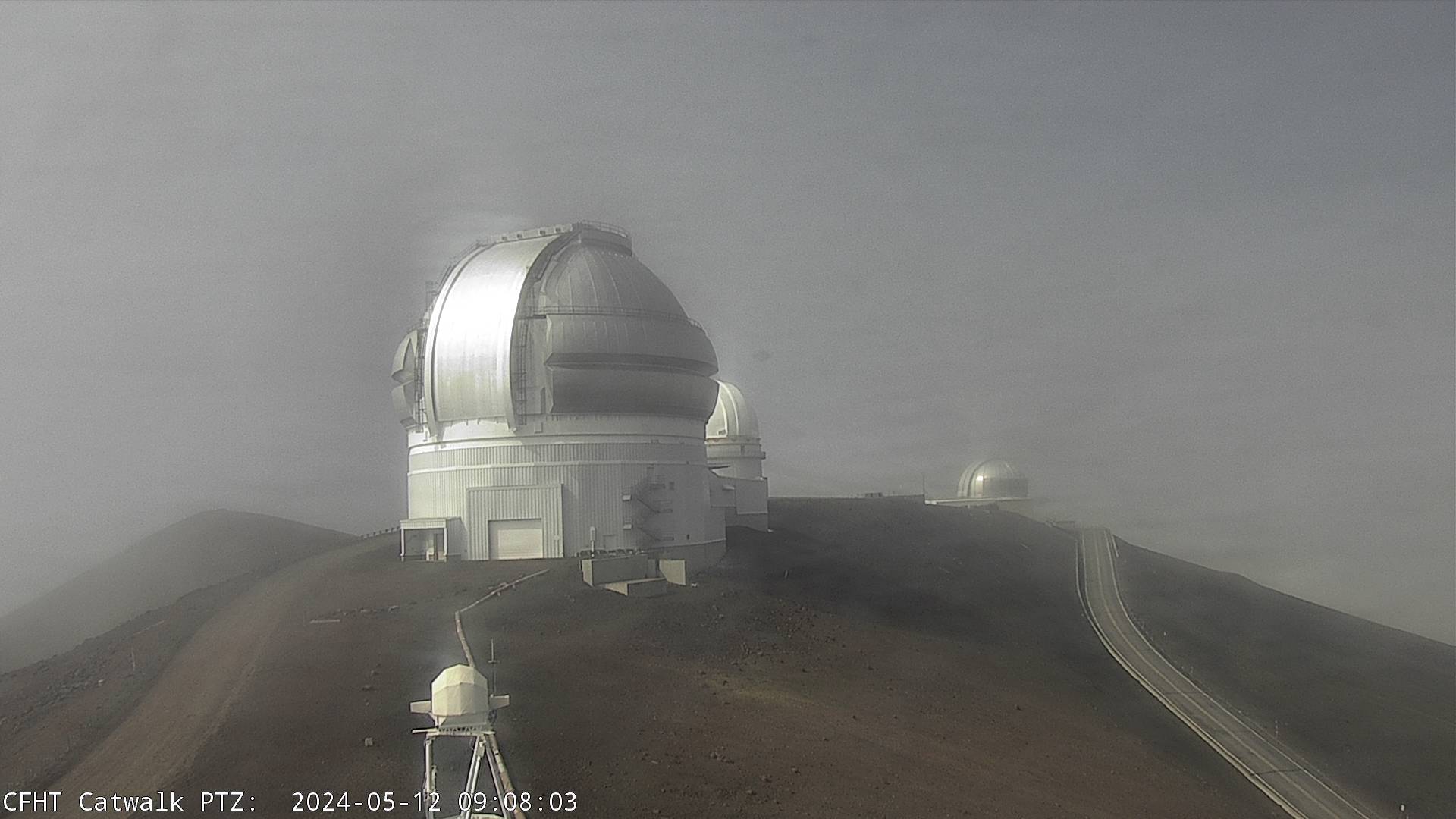
Hawaii’s Mountains – Here’s a link to the live webcam on the summit of near 14,000 foot Mauna Kea on the Big Island of Hawaii. The tallest peak on the island of Maui is the Haleakala Crater, which is near 10,000 feet in elevation. These two webcams are available during the daylight hours here in the islands…and when there’s a big moon rising just after sunset for an hour or two! Plus, during the nights and early mornings you will be able to see stars, and the sunrise too…depending upon cloud conditions.
Tropical Cyclone activity in the eastern and central Pacific – Here’s the latest information coming out of the National Hurricane Center, covering the eastern north Pacific. You can find the latest tropical cyclone information for the central north Pacific (where Hawaii is located) by clicking on this link to the Central Pacific Hurricane Center. Here’s a tracking map covering both the eastern and central Pacific Ocean.
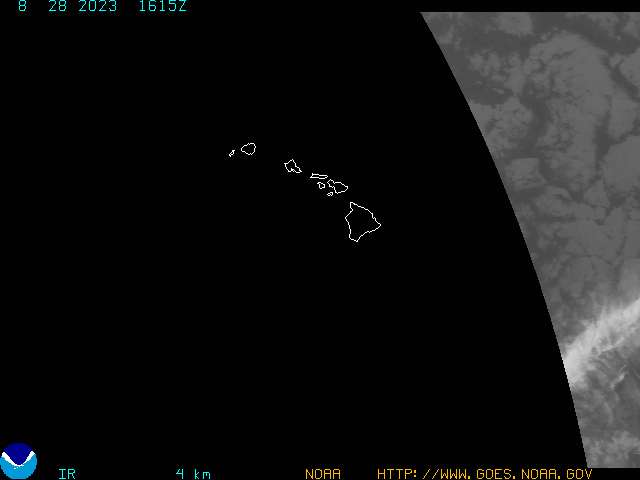
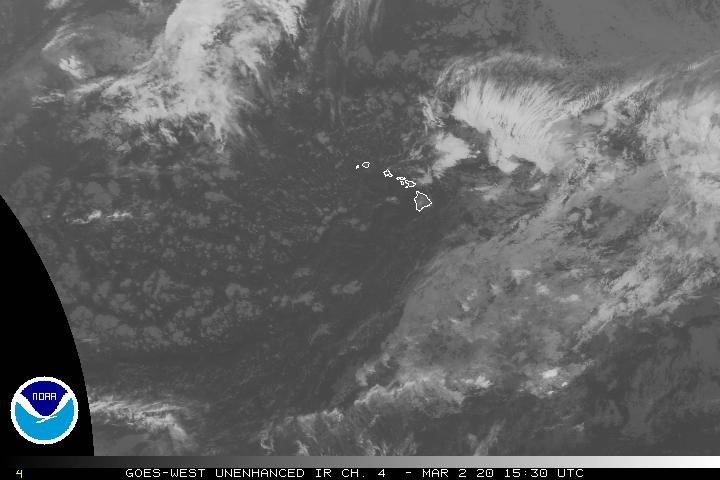
Satellite and Radar Images: To view the cloud conditions we have here in Hawaii, please use the following satellite links, starting off with the Infrared Satellite Image of the islands to see all the clouds around the state during the day and night. This next image is one that gives close images of the islands only during the daytime hours, and is referred to as a Close-up visible image. This next image shows a larger view of the Pacific…giving perspective to the wider ranging cloud patterns in the Pacific Ocean…out from the islands. To help you keep track of where any showers may be around the islands, here’s the latest animated radar image.
Aloha Paragraphs

Hawaiian rainbow low to the ground
Photo Credit: flickr.com
The trade winds, which are common during this part of the late summer season, will continue blowing across our tropical latitudes of the central north Pacific Ocean. Weather maps show a 1030 millibar high pressure system located far to the NNE of the islands Tuesday evening. The latest computer forecast models show the winds remaining stronger than normal through Thursday, then easing back and becoming a little softer Friday and Saturday…only to pick up again Sunday into early next week. These stronger trade winds have caused a small craft wind advisory to be issued for those windiest areas in the southern part of the state.
We find outselves in what could be considered a fairly normal trade wind weather pattern, with most showers falling along the windward coasts and slopes now…which shouldn’t be heavy, but could be quite numerous at times. The long lasting upper level low pressure system, which has been hanging around Hawaii, to the NW, is about 700 miles away Tuesday. The latest computer forecast models now show it returning to an area within 400 miles of the Aloha state in a couple of days. There will likely be little direct influence on our local weather, although the two most pronounced things we’ll notice will be: an increase in high cirrus clouds locally, and a possible modest increase in showers along our windward sides.
It’s Tuesday evening here in the islands, as I update this last paragraph of today’s narrative. We just can’t seem to shake the presence of this very long lasting upper level low pressure system to our NW…it just doesn’t want to go away! During the last week and more, it has at times brought periods of briefly heavy showers, and off and on spells of sun dimming high cirrus clouds. The computer forecast models over the last couple of days, had shown a more distinct increase in showers over the state starting in a couple of days, although now they have backed off that quite a bit. As a matter of fact, the latest model runs show no organized areas of showers arriving through the next week. ~~~ All of these windward showers lately have brought good tidings in terms of pushing the summer drought conditions back. Even the leeward sides, where drought was of most concern, have received off and on showers lately too…all of which is good news! ~~~ By the way, I trust you will enjoy these last few days of summer 2007, as the autumnal equinox occurs here in Hawaii late this coming Saturday night…September 22nd. ~~~ I’ll be back early Wednesday morning with your next weather narrative, I hope you have a great Tuesday night wherever you happen to be spending it! Aloha for now…Glenn.
Posted by Glenn
No Comments
September 17-18 2007
Air Temperatures – The following maximum temperatures were recorded across the state of Hawaii Monday:
Lihue, Kauai – 85F
Honolulu, Oahu – 89
Kaneohe, Oahu – 82
Kahului, Maui – 89
Hilo, Hawaii – 86
Kailua-Kona, Hawaii – 87
Temperatures early Tuesday morning ranged between these warmest and coolest spots near sea level at the 5 a.m. hour:
Lihue, Kauai – 78F
Hilo, Hawaii – 71
Precipitation Totals – The following numbers represent the largest precipitation totals (inches) during the last 24 hours on each of the major islands, as of Tuesday morning:
0.40 HANALEI RIVER, KAUAI
0.55 MANOA LYON ARBORETUM, OAHU
0.04 MOLOKAI
0.01 LANAI
0.00 KAHOOLAWE
3.37 PUU KUKUI, MAUI
1.28 GLENWOOD, BIG ISLAND
Weather Chart – Here’s the latest (automatically updated) weather map…showing a 1029 millibar high pressure system located far NNE of Hawaii. This high pressure system has a ridge of high pressure extending WSW to the north and NW of Hawaii. This pressure configuration will keep moderately strong trade winds blowing…locally stronger and gusty in those locally windiest areas. Here’s a Weather Map Symbol page for clarification about what all those weather symbols mean on the map.
Hawaii’s Mountains – Here’s a link to the live webcam on the summit of near 14,000 foot Mauna Kea on the Big Island of Hawaii. The tallest peak on the island of Maui is the Haleakala Crater, which is near 10,000 feet in elevation. These two webcams are available during the daylight hours here in the islands…and when there’s a big moon rising just after sunset for an hour or two! Plus, during the nights and early mornings you will be able to see stars, and the sunrise too…depending upon cloud conditions.
Tropical Cyclone activity in the eastern and central Pacific – Here’s the latest information coming out of the National Hurricane Center, covering the eastern north Pacific. You can find the latest tropical cyclone information for the central north Pacific (where Hawaii is located) by clicking on this link to the Central Pacific Hurricane Center. Here’s a tracking map covering both the eastern and central Pacific Ocean.
Satellite and Radar Images: To view the cloud conditions we have here in Hawaii, please use the following satellite links, starting off with the Infrared Satellite Image of the islands to see all the clouds around the state during the day and night. This next image is one that gives close images of the islands only during the daytime hours, and is referred to as a Close-up visible image. This next image shows a larger view of the Pacific…giving perspective to the wider ranging cloud patterns in the Pacific Ocean…out from the islands. To help you keep track of where any showers may be around the islands, here’s the latest animated radar image.
Aloha Paragraphs

The famous coconut palm trees of Hawaii
Photo Credit:: flickr.com
The trade winds have become blustery now, strong enough in fact that the NWS forecast office in Honolulu has raised small craft advisory flags over the major channels in the southern part of the state…in addition to Maalaea Bay on Maui, and the leeward waters around the Big Island. Weather maps show a 1029 millibar high pressure system located far to the NNE of the islands Monday. The latest computer forecast models show the winds remaining stronger than normal all week, then easing back and becoming softer during the upcoming weekend. Wind speeds were exceeding 40 mph at South Point on the Big Island Monday afternoon…with many of the windiest places gusting to well over 30 mph.
The long lasting upper low pressure system is now far enough away to the NW of Hawaii, that it’s long lasting influence is now finished. This past weekend was much cloudier than usual, with showers most generous on Saturday. Much of the cloudiness Sunday was due to a considerable amount of cirrus clouds from Molokai down through the Big Island. The bulk of the cirrus clouds are gone now, although we may see those sun dimming clouds returning very soon, blown in our direction by the strong winds high in the atmosphere. Whatever showers that are left around now will fall along the windward sides, and then over the Kona slopes perhaps during the late afternoon or evening hours.
It’s Monday morning here in the islands, as I update this last paragraph of today’s narrative. Well, as mentioned in the paragraphs above, the trade winds will be with us this week as our major weather influence. At the same time, the overlying atmosphere will be quite dry and stable, thanks to high pressure aloft over and around the Hawaiian Islands…making for relatively dry weather. Although, anytime the trade winds are blowing, there’s always that chance of showers arriving along the windward sides. Then too, the Kona slopes on the Big Island are famous for afternoon or evening showers during a trade wind episode. The latest forecast models show another upper level low pressure system arriving to the NW of Kauai after mid-week…which could enhance our incoming trade wind showers Thursday and Friday. ~~~ Since we’re still involved in the late summer of the year, we are still active in the 2007 hurricane season. Looking over into the eastern Pacific, there isn’t anything happening at the moment, although there are a few areas that may flair-up into a tropical depression over the next couple of days. Here in the central Pacific, there are no spinning storms, although there is a tropical disturbance located about 650 miles SE of the Big Island, although if it were to spin up into a tropical depression, it would be slow to develop. ~~~ A large batch of high cloudiness is again moving over the islands, as shown in this satellite image. I’ll be back early Tuesday morning with your next weather narrative, I hope you have a great Monday night wherever you happen to be spending it! Aloha for now…Glenn.
Posted by Glenn
No Comments
September 16-17 2007
Air Temperatures – The following maximum temperatures were recorded across the state of Hawaii Sunday:
Lihue, Kauai – 86F
Honolulu, Oahu – 87
Kaneohe, Oahu – 83
Kahului, Maui – 89
Hilo, Hawaii – 89
Kailua-Kona, Hawaii – 88
Temperatures early Monday morning ranged between these warmest and coolest spots near sea level at the 5 a.m. hour:
Kaneohe, Oahu – 79F
Molokai airport – 73
Precipitation Totals – The following numbers represent the largest precipitation totals (inches) during the last 24 hours on each of the major islands, as of Monday morning:
0.09 KALAHEO, KAUAI
0.39 MANOA LYON ARBORETUM, OAHU
0.01 MOLOKAI
0.00 LANAI
0.00 KAHOOLAWE
0.76 WEST WAILUAIKI, MAUI
0.61 PIIHONUA, BIG ISLAND
Weather Chart – Here’s the latest (automatically updated) weather map…showing a 1029 millibar high pressure system located far NNE of Hawaii. This high pressure system has a ridge of high pressure extending WSW to the north and NW of Hawaii. This pressure configuration will keep moderately strong trade winds blowing…locally stronger and gusty in those locally windiest areas. Here’s a Weather Map Symbol page for clarification about what all those weather symbols mean on the map.
Hawaii’s Mountains – Here’s a link to the live webcam on the summit of near 14,000 foot Mauna Kea on the Big Island of Hawaii. The tallest peak on the island of Maui is the Haleakala Crater, which is near 10,000 feet in elevation. These two webcams are available during the daylight hours here in the islands…and when there’s a big moon rising just after sunset for an hour or two! Plus, during the nights and early mornings you will be able to see stars, and the sunrise too…depending upon cloud conditions.
Tropical Cyclone activity in the eastern and central Pacific – Here’s the latest information coming out of the National Hurricane Center, covering the eastern north Pacific. You can find the latest tropical cyclone information for the central north Pacific (where Hawaii is located) by clicking on this link to the Central Pacific Hurricane Center. Here’s a tracking map covering both the eastern and central Pacific Ocean.
Satellite and Radar Images: To view the cloud conditions we have here in Hawaii, please use the following satellite links, starting off with the Infrared Satellite Image of the islands to see all the clouds around the state during the day and night. This next image is one that gives close images of the islands only during the daytime hours, and is referred to as a Close-up visible image. This next image shows a larger view of the Pacific…giving perspective to the wider ranging cloud patterns in the Pacific Ocean…out from the islands. To help you keep track of where any showers may be around the islands, here’s the latest animated radar image.
Aloha Paragraphs

The beauty of Hawaii
Photo Credit:: flickr.com
The trade winds will be with us through the next week, strongest Wednesday through Friday…then a little lighter by next weekend. Weather maps show a 1032 millibar high pressure system located far to the NE of the islands Sunday. There are no advisories for these trade winds in our marine environment now, although by mid-week for a couple of days, we will likely see a small craft wind advisory over some of the major channels.
A trough of low pressure to our NW, and another trough that moved across our islands Saturday, are moving away now…which will help to bring back a more normal trade wind weather pattern now. Saturday was a cloudy day, with showers falling in many areas, with even a couple of briefly heavy downpours. Sunday’s weather remained cloudier than usual, thanks in large measure to the considerable amount of cirrus clouds from Molokai down through the Big Island. Whatever showers that are left around will fall along the windward sides, and then over the Kona and Kula slopes perhaps during the late afternoon or evening hours…although much lighter than earlier in the weekend.
It’s Sunday evening here in the islands, as I update this last paragraph of today’s narrative. As noted in the paragraph above, a batch of moisture passed through the state yesterday and overnight. You can see by clicking on the following satellite picture, that there are still lots of clouds around. They will however gradually be moving away to our west by Monday. The leeward beaches will have the best luck in finding sunshine, although the cirrus clouds will keep sunshine to a minimum again today. As noted in one of the paragraphs above, we will be transitioning back into a more normal trade wind weather pattern soon however. This will bring us back into a much sunnier reality, just the way our local sunworshippers like it…not to mention the visitors who are here seeking those all important sun tans! ~~~ I’ll be back early Monday morning with your next weather narrative, I hope you have a great Sunday night wherever you happen to be reading from. Aloha, Glenn.
Posted by Glenn
1 Comment
September 13-14 2007
Air Temperatures – The following maximum temperatures were recorded across the state of Hawaii Thursday:
Lihue, Kauai – 85F
Honolulu, Oahu – 87
Kaneohe, Oahu – 83
Kahului, Maui – 89
Hilo, Hawaii – 83
Kailua-Kona, Hawaii – 86
Temperatures early Friday morning ranged between these warmest and coolest spots near sea level at the 4 a.m. hour:
Kaneohe, Oahu – 78F
Hilo, Hawaii – 70
Precipitation Totals – The following numbers represent the largest precipitation totals (inches) during the last 24 hours on each of the major islands, as of Friday morning:
0.40 MOLOAA DAIRY, KAUAI
0.56 POAMOHO 2, OAHU
0.03 MOLOKAI
0.00 LANAI
0.00 KAHOOLAWE
0.86 OHEO GULCH, MAUI
0.12 WAIAKEA UKA , BIG ISLAND
Weather Chart – Here’s the latest (automatically updated) weather map…showing a couple of 1025 millibar high pressure systems located far NNE and NE of Hawaii now. This high pressure system has a ridge of high pressure extending SW to the north of Hawaii. This pressure configuration will keep light to moderately strong trade winds blowing Friday and Saturday…somewhat stronger in those locally windiest areas during the afternoons. Here’s a Weather Map Symbol page for clarification about what all those weather symbols mean on the map.
Hawaii’s Mountains – Here’s a link to the live webcam on the summit of near 14,000 foot Mauna Kea on the Big Island of Hawaii. The tallest peak on the island of Maui is the Haleakala Crater, which is near 10,000 feet in elevation. These two webcams are available during the daylight hours here in the islands…and when there’s a big moon rising just after sunset for an hour or two! Plus, during the nights and early mornings you will be able to see stars, and the sunrise too…depending upon cloud conditions.
Tropical Cyclone activity in the eastern and central Pacific – Here’s the latest information coming out of the National Hurricane Center, covering the eastern north Pacific. You can find the latest tropical cyclone information for the central north Pacific (where Hawaii is located) by clicking on this link to the Central Pacific Hurricane Center. Here’s a tracking map covering both the eastern and central Pacific Ocean.
Satellite Images – To view the cloud conditions we have here in Hawaii, please use the following satellite links, starting off with the Infrared Satellite Image of the islands to see all the clouds around the state during the day and night. This next image is one that gives close images of the islands only during the daytime hours, and is referred to as a Close-up visible image. This next image shows a larger view of the Pacific…giving perspective to the wider ranging cloud patterns in the Pacific Ocean…out from the islands. To help you keep track of where any showers may be around the islands, here’s the latest animated radar image.
Aloha Paragraphs


Showers falling in the West Maui Mountains
Photo Credit:: flickr.com
There continues to be no end in sight for our light to moderately strong trade winds here in Hawaii. Weather maps show a pair of 1026 millibar high pressure systems located far to the NE of the islands Thursday. These high pressure cells have their associated ridges extending southwest to a point north of our islands. The location of this ridge will keep light to moderately strong trade winds blowing, although locally stronger and gusty during the afternoons in those windiest areas around the Aloha state.
An area of showery clouds to the east and southeast of the islands may bring an increase in showers to at least the Big Island, and perhaps Maui…leaving the rest of the state in pretty good shape. The latest GFS computer forecast model run, continues to show an area of tropical moisture coming into the state from the SE direction early Friday. Satellite imagery shows this area as well, the bulk of which will move by to our south. However, the northern fringe will likely come close enough to bring showers to some parts of the southern islands. The majority of the leeward beaches will remain quite dry, with just the occasional cloudy periods…although there is a chance of some spotty showers there asa well.
It’s Thursday evening here in the islands, as I update this last paragraph of today’s narrative. As noted in the paragraph above, a batch of tropical moisture will be passing by to the south of the state over the next couple of days. You can see this area of clouds, currently to the lower right of the Big Island (SE) by clicking on this satellite picture. It appears that these showery clouds won’t make it much further north than the Big Island and Maui, and most of those will likely arrive along the windward side of those southernmost islands. ~~~ Other than that, the only other exciting thing happening here in the islands, at least in terms of the natural environment, is the new south swell that will bring rising surf to our south and west facing leeward beaches now. The NWS office in Honolulu has issued a high surf advisory for those south facing beaches and reefs, so if it looks too large, definitely stay on the beach. ~~~ Most of the state of Hawaii will have nice weather through the next week, or at least that’s how it looks from this vantage point. I’ll be back early Friday morning with your next weather narrative, I hope you have a great Thursday night wherever you happen to be hanging out! Aloha for now…Glenn.
Posted by Glenn
1 Comment
September 12-13 2007
Air Temperatures – The following maximum temperatures were recorded across the state of Hawaii Wednesday:
Lihue, Kauai – 86F
Honolulu, Oahu – 88
Kaneohe, Oahu – 85
Kahului, Maui – 87
Hilo, Hawaii – 84
Kailua-Kona, Hawaii – 85
Temperatures early Thursday morning ranged between these warmest and coolest spots near sea level at the 4 a.m. hour:
Kaneohe, Oahu – 77F
Hilo, Hawaii – 70
Precipitation Totals – The following numbers represent the largest precipitation totals (inches) during the last 24 hours on each of the major islands, as of Thursday morning:
0.22 HANALEI RIVER, KAUAI
0.28 OAHU FOREST NWR, OAHU
0.14 MOLOKAI
0.00 LANAI
0.041 KAHOOLAWE
0.73 PUU KUKUI, MAUI
0.85 HONAUNAU, BIG ISLAND
Weather Chart – Here’s the latest (automatically updated) weather map…showing two 1026 millibar high pressure systems located far NNE of Hawaii now. This high pressure system has a ridge of high pressure extending SW to the north of Hawaii. This pressure configuration will keep light to moderately strong trade winds blowing Thursday and Friday…locally somewhat stronger during the afternoons in those windiest areas around the state. Here’s a Weather Map Symbol page for clarification about what all those weather symbols mean on the map.
Hawaii’s Mountains – Here’s a link to the live webcam on the summit of near 14,000 foot Mauna Kea on the Big Island of Hawaii. The tallest peak on the island of Maui is the Haleakala Crater, which is near 10,000 feet in elevation. These two webcams are available during the daylight hours here in the islands…and when there’s a big moon rising just after sunset for an hour or two! Plus, during the nights and early mornings you will be able to see stars, and the sunrise too…depending upon cloud conditions.
Tropical Cyclone activity in the eastern and central Pacific – Here’s the latest information coming out of the National Hurricane Center, covering the eastern north Pacific. You can find the latest tropical cyclone information for the central north Pacific (where Hawaii is located) by clicking on this link to the Central Pacific Hurricane Center. Here’s a tracking map covering both the eastern and central Pacific Ocean.
Satellite Images – To view the cloud conditions we have here in Hawaii, please use the following satellite links, starting off with the Infrared Satellite Image of the islands to see all the clouds around the state during the day and night. This next image is one that gives close images of the islands only during the daytime hours, and is referred to as a Close-up visible image. This next image shows a larger view of the Pacific…giving perspective to the wider ranging cloud patterns in the Pacific Ocean…out from the islands. To help you keep track of where any showers may be around the islands, here’s the latest animated radar image.
Aloha Paragraphs

Resort life on the island of Lanai
Photo Credit:: flickr.com
A slightly lighter version of the trade winds will blow across the Hawaiian Islands now, then increase some as we move into Friday and the weekend. Weather maps show a somewhat reduced 1026 millibar high pressure system located far to the NE of the islands Wednesday evening. This high pressure cell has its associated ridge extending southwest to a point north of our islands. The location of this ridge will keep light to moderately strong trade winds blowing, although locally gusty during the afternoons. The current computer forecast models suggest that we will see these trade winds strengthening some by the weekend into next week, as this high pressure system moves closer to our area and strengthens. They may be strong enough then to see small craft advisories going up in the major channels in the southern part of the Aloha state.
The upper level trough of low pressure, which has kept our local atmosphere somewhat more unstable than usual, is still around at mid-week. This low doesn’t have very much of an influence on our local weather…although may be able to keep a few briefly heavy showers around here and there. Other than those locally heavier showers we can look for just the usual few passing showers along the windward sides, and a couple of afternoon or evening showers over the interior sections locally, especially the leeward slopes of east Maui, and the Kona slopes of the Big Island. The majority of the leeward beaches will remain quite sunny, with just the occasional cloudy periods. High level winds are bringing cirrus clouds up from the SW at times too, so there may be some intrusion of this high cloudiness during the next couple of days…most notably over east Maui and the Big Island. Just checking the latest GFS computer forecast model run, shows an area of tropical moisture coming into the state from the SE direction on Friday. This could, if the models are correct, bring an increase in showers into the southern part of the state…some of which could be locally heavy then.
It’s Wednesday evening here in the islands, as I update this last paragraph of today’s narrative. Other than the high clouds that are streaming by over the southern part of the 50th state now, and the presence of the upper level low pressure system, located nearby, our weather here in the islands will be just fine. Those high cirrus clouds will filter and dim the sunshine to some degree, although it appears to be quite thin and shouldn’t give our local sunworshippers too much trouble. Back to the upper level trough, it will keep some measure of instability in place, although whatever briefly heavy showers that fall will be very localized at best. The windward sides may see a couple of quick heavy passing showers here and there too. The upcountry sections of Maui, around Kula, Keokea, and down to Ulupalakua, and then over on the Kona slopes of the Big Island…might also see an afternoon or evening shower falling too. ~~~ As noted in the paragraph above, we may see an increase in showers Friday into Saturday, as an area of tropical moisture moves up over the state from the SE…some of which may be locally heavy. ~~~ The big news in the marine environment now will be the arrival of a high surf advisory level south swell on Thursday. Be careful if you find yourself along one of those leeward beaches, and the waves look too large…then stay out of the water by all means! ~~~ I’ll be back early Thursday morning with your next new weather narrative, I hope you have a great Wednesday night until then. Aloha for now…Glenn.
Posted by Glenn
1 Comment
September 11-12 2007
Air Temperatures – The following maximum temperatures were recorded across the state of Hawaii Tuesday:
Lihue, Kauai – 87F
Honolulu, Oahu – 88
Kaneohe, Oahu – 85
Kahului, Maui – 87
Hilo, Hawaii – 84
Kailua-Kona, Hawaii – 86
Temperatures early Wednesday morning ranged between these warmest and coolest spots near sea level at the 4 a.m. hour:
Kaneohe, Oahu – 77F
Hilo, Hawaii – 68
Precipitation Totals – The following numbers represent the largest precipitation totals (inches) during the last 24 hours on each of the major islands, as of Wednesday morning:
0.63 WAILUA, KAUAI
0.51 OAHU FOREST NWR, OAHU
0.16 MOLOKAI
0.01 LANAI
0.03 KAHOOLAWE
1.43 ULUPALAKUA, MAUI
0.70 HONAUNAU, BIG ISLAND
Weather Chart – Here’s the latest (automatically updated) weather map…showing a 1028 millibar high pressure system located far NE of Hawaii now…too far away to provide the strong trade winds closer to the high’s center. This high pressure system has a ridge of high pressure extending SW to the north of Hawaii. This pressure configuration will keep light to moderately strong trade winds blowing both Tuesday and Wednesday…somewhat stronger in those locally windiest areas during the afternoons. Here’s a Weather Map Symbol page for clarification about what all those weather symbols mean on the map.
Hawaii’s Mountains – Here’s a link to the live webcam on the summit of near 14,000 foot Mauna Kea on the Big Island of Hawaii. The tallest peak on the island of Maui is the Haleakala Crater, which is near 10,000 feet in elevation. These two webcams are available during the daylight hours here in the islands…and when there’s a big moon rising just after sunset for an hour or two! Plus, during the nights and early mornings you will be able to see stars, and the sunrise too…depending upon cloud conditions.
Tropical Cyclone activity in the eastern and central Pacific – Here’s the latest information coming out of the National Hurricane Center, covering the eastern north Pacific. You can find the latest tropical cyclone information for the central north Pacific (where Hawaii is located) by clicking on this link to the Central Pacific Hurricane Center. Here’s a tracking map covering both the eastern and central Pacific Ocean.
Satellite Images – To view the cloud conditions we have here in Hawaii, please use the following satellite links, starting off with the Infrared Satellite Image of the islands to see all the clouds around the state during the day and night. This next image is one that gives close images of the islands only during the daytime hours, and is referred to as a Close-up visible image. This next image shows a larger view of the Pacific…giving perspective to the wider ranging cloud patterns in the Pacific Ocean…out from the islands. To help you keep track of where any showers may be around the islands, here’s the latest animated radar image.
Aloha Paragraphs

What a nice private little beach on the Big Island
Photo Credit:: flickr.com
The trade winds will remain active across our tropical latitudes, increasing some as we get to Friday and the weekend, continuing into early next week. Weather maps show the same 1028 millibar high pressure system located far to the NE of the islands Tuesday evening…the one that has been keeping our trade winds alive during the last week. This high pressure system is far away, although the lower end of its associated ridge extends down to our north. The location of this ridge will keep light to moderately strong trade winds blowing, with somewhat stronger gusts in those usual windier areas…especially during the afternoon hours.. The current computer forecast models suggest that we will see these balmy trade winds remaining active through at least the rest of this work week…strengthening some by the weekend into early next week.
A long lasting upper level low pressure system, to the NW of Kauai Tuesday, is moving away now. It doesn’t appear that this low will have much of an influence left on our local weather…although may be able to keep a few briefly heavy showers around here and there. Other than those locally heavier showers we can look for just the usual few passing showers along the windward sides, and a couple of afternoon or evening showers over the interior sections locally, especially the Kona slopes of the Big Island. The majority of the leeward beaches will remain quite sunny, with just the occasional cloudy periods. High level winds are bringing cirrus clouds up from the SW at times too, so there may be some intrusion of this high cloudiness over the next couple of days…most notable over the southern part of the Aloha state.
It’s Tuesday evening here in the islands, as I update this last paragraph of today’s narrative. As is often the case, once we get into the last month of summer, we begin to see more surf breaking along our beaches than during June, July and August. The reason is that we begin to see early season swells being generated by gale low pressure systems far to the NW. At the same time, adding to this activity, retired tropical storms and typhoons in the western Pacific, often end up in the Aleution Islands, and send us swell trains of waves too. Then there’s the late winter storms in the south hemisphere, that send us late summer south swells for our islands. The bottom line here is that we will find lots of waves arriving along all our beaches and reefs during the next week…none of which will be dangerous in size however. ~~~ I was mentioning the high clouds in the previous paragraph, which became quite thick over the Big Island and Maui during the day. At any rate, this evening’s sunset should be pretty spectacular, as will Wednesday morning’s sunrise if those ice crystal clouds are still around then. ~~~ I’ll be back early Wednesday morning with your next weather narrative from paradise, I hope you have a great Tuesday night until then! Aloha for now…Glenn.
Posted by Glenn
No Comments
September 10-11 2007
Air Temperatures – The following maximum temperatures were recorded across the state of Hawaii Monday:
Lihue, Kauai – 86F
Honolulu, Oahu – 89
Kaneohe, Oahu – 85
Kahului, Maui – 90
Hilo, Hawaii – 85
Kailua-Kona, Hawaii – 87
Temperatures early Tuesday morning ranged between these warmest and coolest spots near sea level at the 4 a.m. hour:
Kaneohe, Oahu – 76F
Hilo, Hawaii – 67
Precipitation Totals – The following numbers represent the largest precipitation totals (inches) during the last 24 hours on each of the major islands, as of Tuesday morning:
25.26 MOUNT WAIALEALE, KAUAI…not sure if that is a mistake yet?
0.22 LULUKU, OAHU
0.00 MOLOKAI
0.00 LANAI
0.00 KAHOOLAWE
0.27 ULUPALAKUA, MAUI
2.04 KEALAKEKUA, BIG ISLAND
Weather Chart – Here’s the latest (automatically updated) weather map…showing a 1031 millibar high pressure system located far NE of Hawaii now…too far away to provide the strong trade winds closer to the high’s center. This high pressure system has a ridge of high pressure extending SW to the north of Hawaii. This pressure configuration will keep light to moderately strong trade winds blowing both Tuesday and Wednesday…somewhat stronger in those locally windiest areas during the afternoons. Here’s a Weather Map Symbol page for clarification about what all those weather symbols mean on the map.
Hawaii’s Mountains – Here’s a link to the live webcam on the summit of near 14,000 foot Mauna Kea on the Big Island of Hawaii. The tallest peak on the island of Maui is the Haleakala Crater, which is near 10,000 feet in elevation. These two webcams are available during the daylight hours here in the islands…and when there’s a big moon rising just after sunset for an hour or two! Plus, during the nights and early mornings you will be able to see stars, and the sunrise too…depending upon cloud conditions.
Tropical Cyclone activity in the eastern and central Pacific – Here’s the latest information coming out of the National Hurricane Center, covering the eastern north Pacific. You can find the latest tropical cyclone information for the central north Pacific (where Hawaii is located) by clicking on this link to the Central Pacific Hurricane Center. Here’s a tracking map covering both the eastern and central Pacific Ocean.
Satellite Images – To view the cloud conditions we have here in Hawaii, please use the following satellite links, starting off with the Infrared Satellite Image of the islands to see all the clouds around the state during the day and night. This next image is one that gives close images of the islands only during the daytime hours, and is referred to as a Close-up visible image. This next image shows a larger view of the Pacific…giving perspective to the wider ranging cloud patterns in the Pacific Ocean…out from the islands. To help you keep track of where any showers may be around the islands, here’s the latest animated radar image.
Aloha Paragraphs

Honolua Bay…upper west side of Maui
Photo Credit:: flickr.com
The light to moderately strong trade winds will continue to bring cooling relief from the hot late summer afternoons here in the islands. Weather maps show a 1031 millibar high pressure system located far to the NE of the islands…the source of our trade winds now. This high pressure system is far away, although its associated ridge swings down to our north. The placement of this ridge will keep light to moderately strong trade winds blowing across our tropical latitudes. The current computer forecast models suggest that we see these balmy trade winds remaining active through at least the rest of this week.
Despite the continued presence of an upper level low pressure system near the islands, our weather will remain generally fine for the most part. This low aloft is located just to the north of Kauai Monday evening. It doesn’t appear that this low will have too much of an influence on our local however…although we can’t rule out the chance of a few briefly heavy showers here and there. Otherwise, we can look for just the usual few passing showers along the windward sides, and a couple of afternoon showers over the interior sections locally.
It’s Monday evening here in the islands, as I update this last paragraph of today’s narrative. We’ve just moved through a perfectly lovely weekend, at least in terms of our local weather reality. As mentioned above, we still have that upper level low pressure system hanging around. This low hasn’t been able to do much in terms of dropping many showers. Although, with that said, I notice that Mount Waialeale on Kauai, received a remarkably generous 8.13" of the wet stuff during the last 24 hours! This amount was definitely a lone spike however, in contrast to everywhere else here in the islands. Mount Waialeale is not only the wettest place here in Hawaii, but also arguably the rainiest place in the world…so one expects to see these kinds of big numbers occasionally! Nonetheless, nowhere else in the Aloha state received even a 1/2 an inch of rain in comparison. ~~~ We are still in the active phase of the 2007 hurricane season here in the central Pacific, although I’m pleased to say there is nothing spinning, nor showing signs of any tropical storms at all. Glancing over towards the eastern Pacific (towards Mexico) there isn’t anything brewing there either. The western Pacific has one storm, named Danas (11W), although it is staying away from land and any islands, and was given its final warning Monday evening. So things are looking pretty good for the time being in regards to tropical storm activity. As most of you know tropical storm Gabrielle recently gave high surf, gusty winds, and rainy weather to the North Carolina coast over in the Atlantic Ocean. ~~~ I’ll be back early Tuesday morning with your next weather narrative, I hope you have a great Monday night wherever you may be reading from! Aloha for now…Glenn.
Interesting story on NPR …Dan O’Connor of Papaikou, Hawaii, plays recordings he made of underwater volcanoes and visiting Humpback whales.
Posted by Glenn
[6] Comments
September 9-10 2007
Air Temperatures – The following maximum temperatures were recorded across the state of Hawaii Sunday:
Lihue, Kauai – 86F
Honolulu, Oahu – 90
Kaneohe, Oahu – 83
Kahului, Maui – 88
Hilo, Hawaii – 85
Kailua-Kona, Hawaii – 86
Temperatures early Monday morning ranged between these warmest and coolest spots near sea level at the 4 a.m. hour:
Kaneohe, Oahu – 78F
Hilo, Hawaii – 69
Precipitation Totals – The following numbers represent the largest precipitation totals (inches) during the last 24 hours on each of the major islands, as of Monday morning:
3.77 MOUNT WAIALEALE, KAUAI
0.03 OAHU FOREST NWR, OAHU
0.00 MOLOKAI
0.00 LANAI
0.00 KAHOOLAWE
0.21 HANA AIRPORT, MAUI
0.34 PAHOA, BIG ISLAND
Weather Chart – Here’s the latest (automatically updated) weather map…showing a 1032 millibar high pressure system located far NE of Hawaii now…too far away to provide the strong trade winds closer to the high’s center. This high pressure system has a ridge of high pressure extending SW to the north of Hawaii. This pressure configuration will keep light to moderately strong trade winds blowing both Monday and Tuesday…somewhat stronger in those locally windiest areas during the afternoons. Here’s a Weather Map Symbol page for clarification about what all those weather symbols mean on the map.
Hawaii’s Mountains – Here’s a link to the live webcam on the summit of near 14,000 foot Mauna Kea on the Big Island of Hawaii. The tallest peak on the island of Maui is the Haleakala Crater, which is near 10,000 feet in elevation. These two webcams are available during the daylight hours here in the islands…and when there’s a big moon rising just after sunset for an hour or two! Plus, during the nights and early mornings you will be able to see stars, and the sunrise too…depending upon cloud conditions.
Tropical Cyclone activity in the eastern and central Pacific – Here’s the latest information coming out of the National Hurricane Center, covering the eastern north Pacific. You can find the latest tropical cyclone information for the central north Pacific (where Hawaii is located) by clicking on this link to the Central Pacific Hurricane Center. Here’s a tracking map covering both the eastern and central Pacific Ocean.
Satellite Images – To view the cloud conditions we have here in Hawaii, please use the following satellite links, starting off with the Infrared Satellite Image of the islands to see all the clouds around the state during the day and night. This next image is one that gives close images of the islands only during the daytime hours, and is referred to as a Close-up visible image. This next image shows a larger view of the Pacific…giving perspective to the wider ranging cloud patterns in the Pacific Ocean…out from the islands. To help you keep track of where any showers may be around the islands, here’s the latest animated radar image.
Aloha Paragraphs

Kona
Photo Credit:: flickr.com
The trade winds will remain active through the next week, blowing in the light to moderately strong range here in the islands. The latest weather map shows a strong 1034 millibar high pressure system located far to the NE of the islands…the source of our trade winds now. This high pressure system is too far away to provide us with its strongest winds. It associated ridge is close enough however, to keep light to moderately strong trade winds across our tropical latitudes. The current computer forecast models suggest that we will see no end to this late summer trade wind episode through at least the next week.
An upper level low pressure system, southwest of Oahu, will keep our local atmosphere a bit unstable, with some of the showers around briefly heavy. As this satellite image shows, there is a distinct lack of clouds being carried our way on the trade winds. Although that satellite picture does show an area of clouds just east of the state, which should increase our clouds and a few showers Sunday night into Monday morning. The daytime heating of the islands may prompt some afternoon cloud buildups as well, which may provide a shower or two. We can’t rule out the chance of a few heavy showers as a result…since the upper low pressure in our general vicinity will allow good vertical development to these afternoon convective clouds.
It’s Sunday evening here in the islands, as I update this last paragraph of today’s narrative. The upper level low pressure system mentioned above, is still around, now located to the SW of Oahu. This upper low is expected to pass across our islands, and end to the north of Hawaii over the next couple of days. Sometimes this can promote showers, or even locally heavy showers, although the models show not very much moisture for this upper low to work with…so there’s a good chance that it won’t have much influence on our local weather conditions. ~~~ A storm far to the NW has generated a NW swell, which will arrive around the middle of the new work week ahead. Speaking of surf, a storm in the southern hemisphere, down near New Zealand, has also generated a swell, which will arrive on the oppose sides of our islands (along the leeward shores) about the same time during the new week ahead. ~~~ I’ll be back early Monday morning with your next weather narrative, I hope you have a great Sunday night wherever you happen to be spending it! Aloha for now…Glenn.
Posted by Glenn
[2] Comments
September 6-7 2007
Air Temperatures – The following maximum temperatures were recorded across the state of Hawaii Thursday:
Lihue, Kauai – 86F
Honolulu, Oahu – 86
Kaneohe, Oahu – 86
Kahului, Maui – 89
Hilo, Hawaii – 87
Kailua-Kona, Hawaii – 87
Temperatures early Friday morning ranged between these warmest and coolest spots near sea level at the 4 a.m. hour:
Honolulu, Oahu – 75F
Kahului, Maui – 66
Precipitation Totals – The following numbers represent the largest precipitation totals (inches) during the last 24 hours on each of the major islands, as of Friday morning:
1.72 MOUNT WAIALEALE, KAUAI
0.59 MAKUA RANGE, OAHU
0.00 MOLOKAI
0.00 LANAI
0.00 KAHOOLAWE
0.22 OHEO GULCH, MAUI
0.44 PALI 2, BIG ISLAND
Weather Chart – Here’s the latest (automatically updated) weather map…showing a 1032 millibar high pressure system located far NE of Hawaii now. At the same time we find a low pressure system, with its associated early season cold front to our NNW. This pressure configuration will keep the trade winds lighter than usual Friday…gaining a little strength this weekend. Here’s a Weather Map Symbol page for clarification about what all those weather symbols mean on the map.
Hawaii’s Mountains – Here’s a link to the live webcam on the summit of near 14,000 foot Mauna Kea on the Big Island of Hawaii. The tallest peak on the island of Maui is the Haleakala Crater, which is near 10,000 feet in elevation. These two webcams are available during the daylight hours here in the islands…and when there’s a big moon rising just after sunset for an hour or two! Plus, during the nights and early mornings you will be able to see stars, and the sunrise too…depending upon cloud conditions.
Tropical Cyclone activity in the eastern and central Pacific – Here’s the latest information coming out of the National Hurricane Center, covering the eastern north Pacific. You can find the latest tropical cyclone information for the central north Pacific (where Hawaii is located) by clicking on this link to the Central Pacific Hurricane Center. Here’s a tracking map covering both the eastern and central Pacific Ocean.
Satellite Images – To view the cloud conditions we have here in Hawaii, please use the following satellite links, starting off with the Infrared Satellite Image of the islands to see all the clouds around the state during the day and night. This next image is one that gives close images of the islands only during the daytime hours, and is referred to as a Close-up visible image. This next image shows a larger view of the Pacific…giving perspective to the wider ranging cloud patterns in the Pacific Ocean…out from the islands. To help you keep track of where any showers may be around the islands, here’s the latest animated radar image.
Aloha Paragraphs

The gorgeous beaches of Oahu
Photo Credit:: flickr.com
We’ll see a softer version of the trade winds here in the islands for a day or two now. The latest weather map shows a 1030 millibar high pressure system located far to the NE of the islands…the source of these lighter trade winds. Meanwhile, that same weather map shows an early season gale low pressure system to the NNW of Kauai. As this storm spins by to our north over the next couple of days, its associated cold front is pushing SE towards Hawaii. This frontal cloud band won’t make it to the main Hawaiian Islands, although it has pushed our trade wind producing high pressure ridge southward, closer to us now. This in turn has weakened our local trade winds. Weather models suggest that already by the weekend the trade winds will be picking up some speed, becoming light to moderately strong again through the middle of next week.
The overlying atmosphere is quite dry at the moment, thus limiting showers for the time being. The surface low pressure system, referred to in the paragraph above, will remain far to the north of Hawaii. This distance, even for its closer early season cold front, will have little influence in our area in terms of precipitation. A few showers will fall at times along the windward sides as usual, and perhaps along the Kona slopes on the Big Island. Weather models show another low pressure system forming to the NW of the state around Sunday, although once again, its associated cold front won’t make it down into our tropical latitudes. It will however cause a softening of our local trade winds by the middle of next week.
It’s Thursday here in the islands, as I update this last paragraph of today’s narrative. Thursday will be a relatively dry day here in Hawaii. Although looking at satellite imagery, there appears to be a minor area of showery looking clouds that may bring an increase in moisture to the windward sides of the Big Island and Maui Thursday night into Friday morning. A second field of showery looking clouds may make an appearance by Saturday, which as it turns out, is the remnant moisture from former tropical storm Gil, which was active in the eastern Pacific about a week ago. Neither of these two potential shower producers will bring any major rainfall into the state, and focus their efforts most generously along the windward coasts and slopes. This will more than likely keep the leeward beaches warm and mostly dry, although there could be somewhat more cloudiness around than normal. ~~~ I enjoyed watching the video below, it’s almost five minutes long, but with the music group the Doors playing a stormy song, it’s an unusual chance to see what it’s like to fly into a monster hurricane! If you can, stick with it all the way to the end, as the plane punches through to the clear center of the storm, its impressive! ~~~ I’ll be back early Friday morning with your next weather narrative from paradise. I hope you have a great Thursday night until then! Aloha for now…Glenn.
Here’s a video made three days ago of a recon plane flying into the eyewall of category 5 hurricane Felix…with a good music track!
Interesting…Felix and Henriette made history Tuesday, with both Atlantic and Pacific hurricanes making landfall in the same day. This is the first time this has happened since records began in 1949. Felix slammed into Central America’s Miskito coastline on Tuesday, with Henriette striking the Baja peninsula just eight hours later. Felix hit the remote north-eastern coast as a category 5 hurricane; the strongest on the scale, packing winds of 160 mph. The hardest hit region was Puerto Cabezas where torrential rains destroyed almost half of the city’s houses, leaving a number of people dead. After making landfall, Felix quickly weakened into a tropical storm, but forecasters at the National Hurricane Center are still worried that up to 25 inches of rain could drench Guatemala City over the coming days. It has been a record breaking start to the 2007 hurricane season, with Felix coming just two weeks after Dean tore through southern Mexico. This marked the first time on record that two category 5 Atlantic hurricanes hit land in the same year.
Posted by Glenn
No Comments
September 5-6 2007
Air Temperatures – The following maximum temperatures were recorded across the state of Hawaii Wednesday:
Lihue, Kauai – 85F
Honolulu, Oahu – 88
Kaneohe, Oahu – 85
Kahului, Maui – 87
Hilo, Hawaii – 87
Kailua-Kona, Hawaii – 85
Temperatures early Thursday morning ranged between these warmest and coolest spots near sea level at the 4 a.m. hour:
Lihue, Kauai – 77F
Kahului, Maui – 68
Precipitation Totals – The following numbers represent the largest precipitation totals (inches) during the last 24 hours on each of the major islands, as of Thursday morning:
1.75 HANALEI RIVER, KAUAI
0.94 POAMOHO 2, OAHU
0.07 MOLOKAI
0.02 LANAI
0.01 KAHOOLAWE
0.31 OHEO GULCH, MAUI
0.51 LAUPAHOEHOE, BIG ISLAND
Weather Chart – Here’s the latest (automatically updated) weather map…showing a 1030 millibar high pressure system located far NE of Hawaii now. At the same time we find a gale low pressure system, with its associated early season cold front to our NW. This pressure configuration will keep the trade winds lighter than usual Thursday…gaining a little strength starting later Friday into the weekend. Here’s a Weather Map Symbol page for clarification about what all those weather symbols mean on the map.
Hawaii’s Mountains – Here’s a link to the live webcam on the summit of near 14,000 foot Mauna Kea on the Big Island of Hawaii. The tallest peak on the island of Maui is the Haleakala Crater, which is near 10,000 feet in elevation. These two webcams are available during the daylight hours here in the islands…and when there’s a big moon rising just after sunset for an hour or two! Plus, during the nights and early mornings you will be able to see stars, and the sunrise too…depending upon cloud conditions.
Tropical Cyclone activity in the eastern and central Pacific – Here’s the latest information coming out of the National Hurricane Center, covering the eastern north Pacific. You can find the latest tropical cyclone information for the central north Pacific (where Hawaii is located) by clicking on this link to the Central Pacific Hurricane Center. Here’s a tracking map covering both the eastern and central Pacific Ocean.
Satellite Images – To view the cloud conditions we have here in Hawaii, please use the following satellite links, starting off with the Infrared Satellite Image of the islands to see all the clouds around the state during the day and night. This next image is one that gives close images of the islands only during the daytime hours, and is referred to as a Close-up visible image. This next image shows a larger view of the Pacific…giving perspective to the wider ranging cloud patterns in the Pacific Ocean…out from the islands. To help you keep track of where any showers may be around the islands, here’s the latest animated radar image.
Aloha Paragraphs

Elementally Tropical: land, water, and air…with clouds
Photo Credit:: flickr.com
The trade winds will remain active here in the Hawaiian Islands, although get softer as we head through the next couple of days. The latest weather map shows a 1030 millibar high pressure system located far to the NE of the islands…the source of our trade winds now. Meanwhile, that same weather map shows an early season storm low pressure system about 1000 miles to the NNW of Kauai. As this storm develops and deepens a bit more over the next couple of days, its associated cold front will push SE towards Hawaii. This frontal cloud band won’t get near the main Hawaiian Islands, although it will push our trade wind producing high pressure ridge southward, closer to us. This in turn will weaken our local trade winds, becoming lighter over the next couple of days, remaining somewhat lighter than normal into early next week.
The trade winds will remain strong enough to carry moisture patches into the state, arriving most frequently along our north and east facing windward coasts and slopes. The surface low pressure system, referred to in the paragraph above, will remain far to the NW and north of Hawaii through its life cycle. This distance, even for its associated early season cold front, will have little influence in our area in terms of precipitation. Showers will fall at times along the windward sides as usual, and perhaps along the Kona slopes on the Big Island…and along the leeward slopes of the Haleakala Crater during the afternoons or evenings too. As the winds come down soon, we may see some increase in those afternoon cumulus cloud buildups over the leeward sides of the larger islands…leading to some modest increase showers then.
It’s Wednesday evening here in the islands, as I update this last paragraph of today’s narrative. It’s rather odd to find myself writing about storm low pressure systems, and early season cold fronts during the first week of September. Not rare, although not all that common either. I must admit, after writing my way through a rather uneventfully long summer, full of normal trade wind weather patterns, that I do enjoy having some new words to toss around here! This storm, the primary topic of our discussion today, is nothing like what we would find during the winter months, although nonetheless, it is a bonafide storm, which brings to mind strong winds blowing on the ocean surface. As a matter of fact, that’s exactly what it is, and in that regard will be sending us a small NW swell this weekend. As a reminder: winds blowing on water is what produces swells, which in turn arrive along our local beaches as waves. We’ll find a small NW swell breaking on our NW and north shores by Saturday, again though, nothing like what we will find later in the upcoming autumn season, when the truly big stuff starts rolling in! ~~~ I’ll be back early Thursday morning with your next weather narrative, I hope you have a really nice Wednesday night until then! Aloha for now…Glenn.
Here’s a video made two days ago of a recon plane flying into the eyewall of category 5 hurricane Felix!
Interesting…Felix and Henriette made history yesterday, with both Atlantic and Pacific hurricanes making landfall in the same day. This is the first time this has happened since records began in 1949. Felix slammed into Central America’s Miskito coastline on Tuesday, with Henriette striking the Baja peninsula just eight hours later. Felix hit the remote north-eastern coast as a category 5 hurricane; the strongest on the scale, packing winds of 160 mph. The hardest hit region was Puerto Cabezas where torrential rains destroyed almost half of the city’s houses, leaving a number of people dead. After making landfall, Felix quickly weakened into a tropical storm, but forecasters at the National Hurricane Center are still worried that up to 25 inches of rain could drench Guatemala City over the coming days. It has been a record breaking start to the 2007 hurricane season, with Felix coming just two weeks after Dean tore through southern Mexico. This marked the first time on record that two category 5 Atlantic hurricanes hit land in the same year.
« Previous Page — Next Page »












 Email Glenn James: